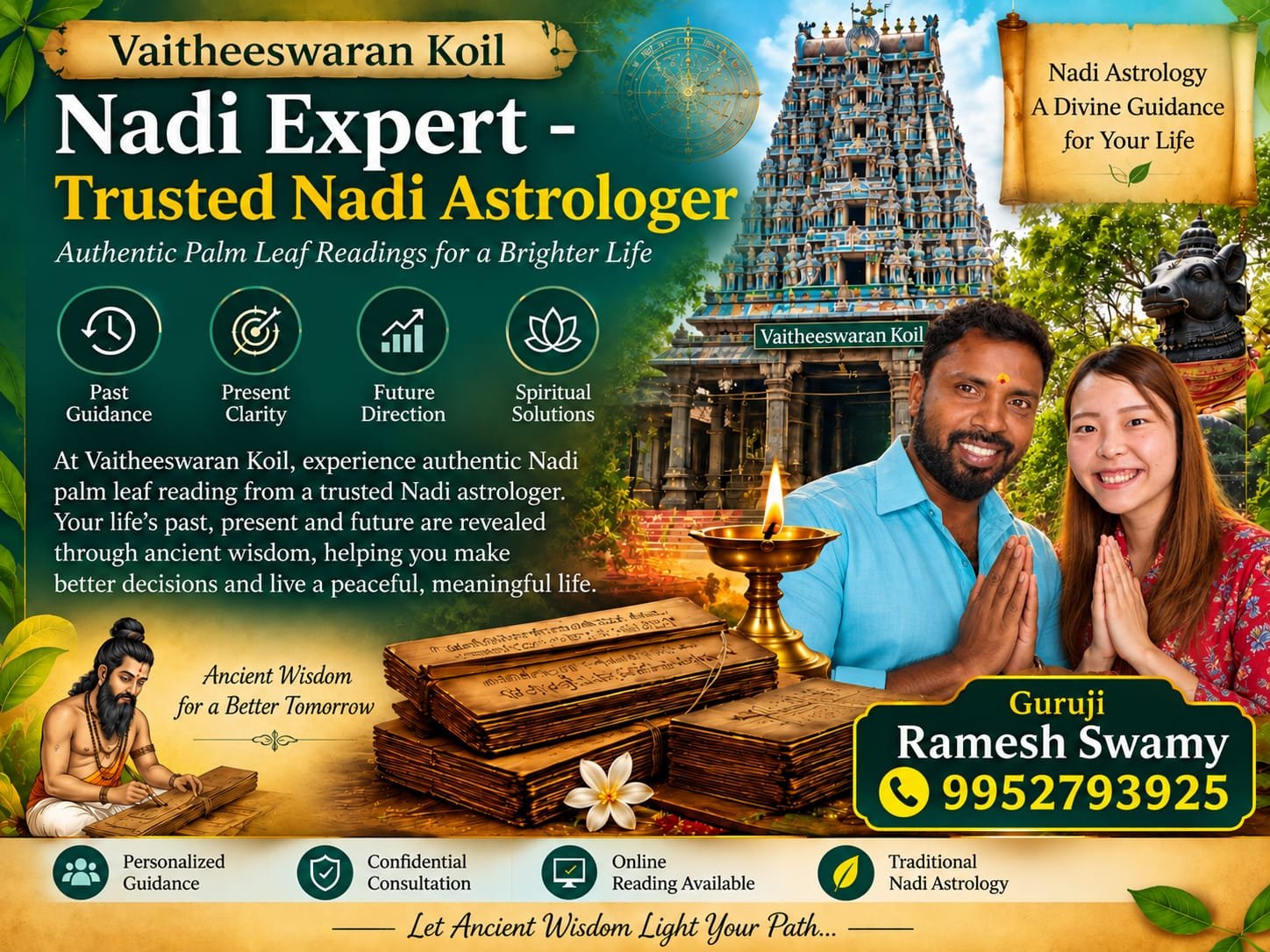
Vaitheeswaran Koil has long been associated with the traditional practice of Nadi Astrology, an ancient system connected with palm-leaf manuscripts and the wisdom passed down through generations. For many people, a Nadi Astrology consultation is not simply about hearing predictions; it is an opportunity to explore life from a traditional spiritual perspective and understand different stages of one’s personal journey. The palm-leaf tradition is often associated with ancient Siddhars, including Sage Agastya, whose name holds an important place in the Nadi tradition. People visiting Vaitheeswaran Koil may seek Nadi readings to learn about subjects such as family, education, career, marriage, finances, relationships, personal responsibilities, spiritual interests, and future plans. A trusted Nadi astrologer helps explain the traditional reading carefully so that visitors can understand the information in a simple and comfortable manner.
One of the distinctive features associated with traditional Nadi Astrology is the process of searching for a corresponding palm-leaf manuscript. The consultation may begin with basic identification procedures used within the Nadi tradition. A thumb impression is commonly used as part of the classification process before suitable bundles of palm leaves are examined. The reader may then use a sequence of questions and answers to narrow down the search. Rather than immediately assuming that a particular leaf belongs to a visitor, the traditional process involves checking identifying details until a suitable match is considered to have been found. This search itself can be an interesting experience for people who are learning about Nadi Astrology for the first time.
After a palm leaf is identified, the information associated with the reading is explained in an understandable way. Traditional readings can cover different areas of life depending on the type of consultation and the material being interpreted. Some visitors are mainly interested in their career direction, while others may want to discuss marriage, family responsibilities, business, education, financial planning, or personal development. The value of a consultation for many visitors comes from having the traditional material explained patiently rather than receiving complicated terminology without context. A clear conversation gives the person an opportunity to ask questions and better understand what the reader is describing.
At Sri Agasthiya Nadi Astrology Center, the focus can be presented around preserving this traditional approach while making the consultation easier for modern visitors to follow. Guruji Ramesh Swamy can guide visitors through the Nadi reading process by explaining each stage in straightforward language. Someone who has never experienced palm-leaf astrology before may naturally have questions about how leaves are classified, how a particular manuscript is searched for, what information may be discussed, and how the reading proceeds. Providing these explanations clearly can help visitors understand the tradition rather than treating the consultation as a rushed experience.
Vaitheeswaran Koil also gives Nadi Astrology a distinctive cultural setting. The town is widely associated with temple traditions, devotional practices, and generations of palm-leaf astrology readers. For visitors interested in traditional Indian astrology, experiencing a Nadi consultation in this setting can provide additional historical and cultural context. Palm-leaf bundles, traditional reading methods, Tamil verses or writings, and the interpretation process together create an experience that differs from a standard horoscope consultation. Instead of beginning only with a modern printed birth chart, Nadi Astrology is traditionally centered on identifying and interpreting preserved palm-leaf records.
Another important part of a good consultation is communication. Ancient traditions can sometimes appear difficult to understand when they are presented using unfamiliar terminology. A reader who explains the meaning patiently can make the experience more accessible. Visitors should feel comfortable asking what a particular statement means, which part of life is being discussed, and how the traditional interpretation is understood. This creates a more informative experience and allows the person receiving the reading to consider the information thoughtfully rather than accepting every statement without question.
Modern technology has also made it possible for people who cannot easily travel to Vaitheeswaran Koil to enquire about online Nadi Astrology consultations. People living elsewhere in India or abroad may want to understand how the identification process works remotely and what information is required before arranging a consultation. Online communication can make initial enquiries, appointment coordination, and explanations more convenient. At the same time, clearly explaining the traditional process remains important so that visitors understand what they are requesting before proceeding with a reading.
A responsible approach to Nadi Astrology should also respect personal choice. Astrology can provide a traditional or spiritual perspective, but important decisions involving health, education, money, legal matters, relationships, or career should still be considered carefully using appropriate practical information and professional advice where necessary. A Nadi reading can therefore be approached as a traditional form of guidance and reflection rather than as a replacement for a person’s own judgment. This balanced understanding can make the consultation more meaningful and help visitors engage with the tradition thoughtfully.
For people searching for a Vaitheeswaran Koil Nadi Expert or Trusted Nadi Astrologer, it can be useful to look for a consultation where the procedure, available services, fees, and expectations are communicated clearly. Visitors may also ask beforehand whether the consultation is conducted directly or online, how long the process may take, and what information they should have ready. Transparent communication can make the experience smoother, particularly for first-time visitors who may not be familiar with the Nadi palm-leaf tradition.
Ultimately, Nadi Astrology in Vaitheeswaran Koil represents a meeting point between ancient palm-leaf tradition and the questions people continue to ask about their lives today. The manuscripts, Siddhar tradition, identification process, interpretation, and personal conversation all contribute to its distinctive character. Under the guidance of Guruji Ramesh Swamy, visitors to Sri Agasthiya Nadi Astrology Center can explore this traditional system in a clear and approachable way. Whether someone visits Vaitheeswaran Koil personally or enquires about an online consultation, the experience can serve as an opportunity to discover the history and methods of Nadi Astrology while reflecting thoughtfully on family, career, relationships, responsibilities, personal goals, and the path ahead.