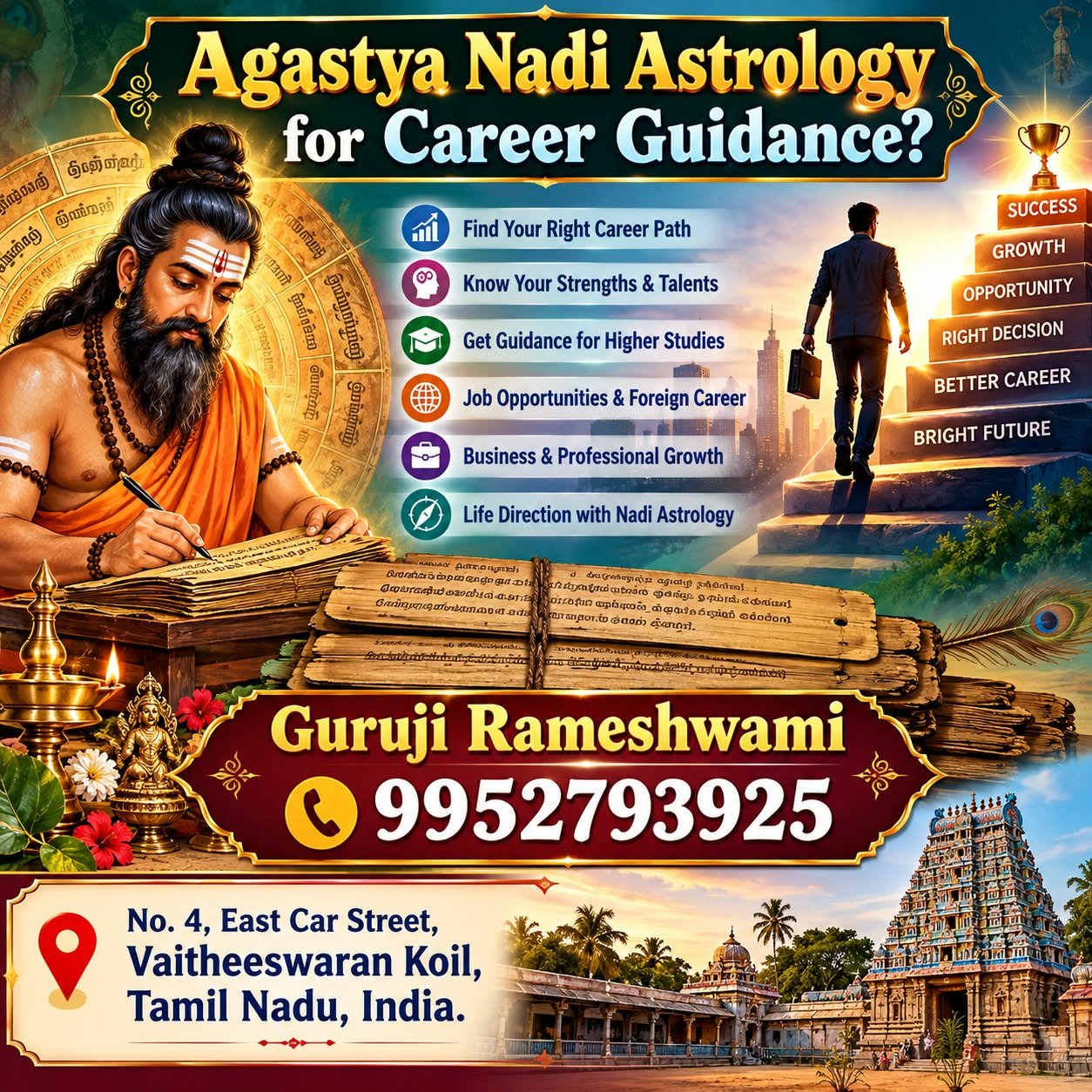
Agastya Nadi Astrology for Career Guidance?

Agastya Nadi Astrology for Career Guidance?

Choosing a career is one of the most important decisions in a person’s life because it can influence education, financial stability, personal satisfaction, family responsibilities, and long-term goals. Many people reach a stage where they begin to wonder whether they are following the right professional path, whether a new job would suit them, whether starting a business is a good direction, or whether opportunities connected with another city or country may become important in their future. In the traditional belief system surrounding Agastya Nadi Astrology, career-related questions are approached through the ancient palm-leaf tradition associated with Sage Agastya and other Siddhars. Nadi Astrology has been preserved as a traditional form of astrology in parts of Tamil Nadu, and Vaitheeswaran Koil is especially well known for its association with palm-leaf readings. According to this tradition, certain palm leaves are believed to contain accounts connected with different individuals and aspects of their lives. A Nadi consultation traditionally begins with an identification process rather than immediately offering a career prediction. The seeker’s thumb impression may be used to classify the person into a traditional category, after which bundles of palm leaves are examined. A reader may ask a sequence of identifying questions while searching for a leaf believed to correspond to the individual. Once a matching leaf is traditionally identified, its contents may be interpreted and explained to the seeker. Career and professional life can form one part of such a reading. Within Nadi tradition, career guidance may involve discussions about education, employment, professional abilities, business interests, periods of change, financial responsibilities, overseas opportunities, and the challenges a person may encounter while pursuing particular goals. This does not mean that a palm-leaf reading should be treated as a scientifically proven method of determining a person’s future or as a substitute for practical career planning. Rather, people who value this tradition may use a reading as a cultural or spiritual perspective alongside their own research, education, skills, interests, and personal judgment. One of the most meaningful questions in career planning is not simply “Which job will I get?” but “What kind of work is suitable for my abilities and circumstances?” A person may have several talents but remain uncertain about which one deserves greater attention. Another individual may have a stable job but feel that professional growth has slowed. Someone else may be deciding between employment and entrepreneurship, while a student may be confused about higher education and future specialization. Agastya Nadi Astrology, according to traditional interpretations, approaches such concerns by considering different periods and influences described in the reading. The purpose for many seekers is therefore not merely to hear a prediction but to gain another perspective from which to think about their choices. For students, a career-oriented Nadi consultation may traditionally discuss areas such as education, higher studies, professional training, or changes in academic direction. However, decisions about courses and careers should also consider academic performance, genuine interests, aptitude, costs, employment prospects, and advice from qualified teachers or career professionals. For working professionals, questions may focus on job changes, promotions, workplace responsibilities, professional stability, or opportunities to develop new skills. A reading may encourage reflection on timing and direction according to astrological tradition, but practical factors such as qualifications, experience, workplace conditions, salary, and long-term development remain essential when making an actual decision. Business owners and aspiring entrepreneurs may similarly approach Nadi Astrology with questions concerning business development, partnerships, new ventures, or professional obstacles. Traditional guidance can serve as a reflective element, while financial planning, market research, legal requirements, and professional advice should remain central to real-world business decisions. Overseas employment is another subject that often creates uncertainty. A person considering work abroad may wonder about relocation, adaptation, career development, or whether remaining closer to home would be more appropriate. In Nadi tradition, such questions may be discussed within the broader interpretation of the individual’s life path. Yet any decision involving overseas study or employment should also be based on verified information regarding visas, qualifications, contracts, expenses, safety, and career prospects. In this way, traditional consultation and responsible decision-making can remain clearly distinguished. Career development also involves periods of difficulty. Job loss, unsuccessful interviews, delayed promotions, changing industries, or uncertainty after completing studies can make people feel that their professional direction has become unclear. Traditional astrology may provide a framework through which some individuals reflect on these periods, but setbacks should not automatically be interpreted as permanent signs about a person’s destiny. Skills can be developed, qualifications can be improved, professional networks can expand, and new opportunities can appear through sustained effort. A constructive Nadi consultation should therefore not discourage a person from taking practical action or make unrealistic guarantees about employment, income, promotion, or business success. Instead, the traditional reading can be understood as one source of reflection that exists alongside personal responsibility and informed choices. The connection between Agastya Nadi Astrology and Vaitheeswaran Koil gives this practice a distinctive cultural setting. For generations, visitors interested in Nadi traditions have associated the area with preserved palm-leaf manuscripts and traditional readers. The atmosphere of temples, Tamil spiritual traditions, old manuscripts, and stories about Siddhars contributes to the cultural identity surrounding the practice. For someone visiting Vaitheeswaran Koil for a career-related Nadi consultation, understanding the traditional process can make the experience more meaningful. Rather than approaching the reading with the expectation of receiving guaranteed answers, it may be more useful to arrive with thoughtful questions about education, employment, professional development, business, or future goals. A career is rarely shaped by one decision alone. It develops through learning, experience, opportunities, mistakes, relationships, changing responsibilities, and personal growth. This is why career guidance is most useful when it helps a person think carefully rather than simply telling them what to do. Within the traditional framework of Agastya Nadi Astrology, a career reading may offer themes that encourage such reflection. The individual can then compare those themes with present circumstances and make decisions based on reliable information and personal judgment. People interested in learning more about the traditional palm-leaf process and career-related Nadi readings may contact Guruji L. Ramesh Swamy at 9952793925. Consultations are associated with No. 4, East Car Street, Vaitheeswaran Koil, Tamil Nadu, India. Whether your questions concern higher studies, choosing a profession, changing jobs, business development, professional growth, or overseas opportunities, Agastya Nadi Astrology can be approached as part of an ancient cultural and spiritual tradition. Its value for believers lies in the opportunity to reflect on life direction through a historical palm-leaf practice, while important career decisions should ultimately combine thoughtful self-assessment, practical preparation, trustworthy information, and the individual’s own choices.
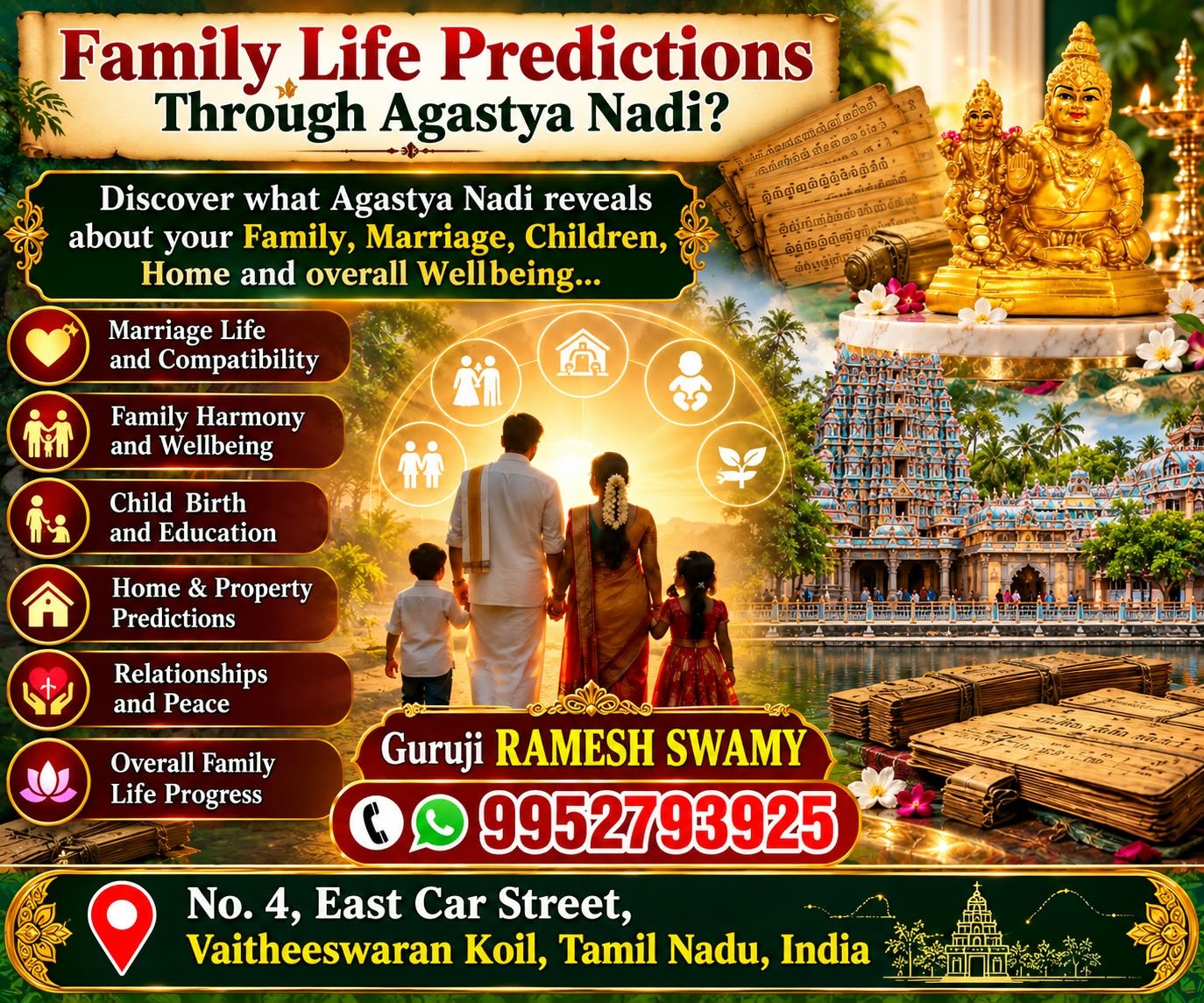
Family Life Predictions Through Agastya Nadi?

Family Life Predictions Through Agastya Nadi?

Family life is one of the most meaningful parts of a person’s journey because it brings together love, responsibility, relationships, children, home, emotional understanding, financial planning, and the hopes we carry for the future, and in the traditional approach of Agastya Nadi Astrology, these areas are explored through the belief that ancient palm-leaf manuscripts contain guidance connected with an individual’s life path and karmic journey. “Family Life Predictions Through Agastya Nadi” is therefore not simply about asking what may happen tomorrow; it can be approached as a traditional way of reflecting on how different stages of family life may unfold and what kind of choices, responsibilities, and relationships may become important along the way. According to Nadi traditions, a reading may discuss subjects such as marriage, compatibility between partners, understanding between husband and wife, relationships with parents and relatives, childbirth, children’s development, education, property, changes in residence, financial responsibilities, and periods when greater patience or cooperation may be useful within the household. Every family has its own story, and even people born into the same family can experience life very differently, which is why a Nadi consultation traditionally focuses on the individual rather than giving one general prediction for everyone. The process is commonly associated with identifying a corresponding palm leaf through traditional methods and then interpreting the information recorded on it. In this tradition, the value of a reading is not limited to hearing predictions; many people approach it as an opportunity to think more deeply about their relationships, responsibilities, habits, and future decisions. Marriage, for example, is more than a ceremony or a particular date. It involves communication, trust, patience, shared responsibilities, financial understanding, and the ability of two people to grow together while respecting their individual personalities. An Agastya Nadi family-life reading may traditionally explore themes connected with marriage and partnership, but such guidance is best understood as spiritual or cultural guidance rather than a guaranteed description of future events. Similarly, when questions arise about children, parents naturally think about their wellbeing, education, talents, opportunities, character, and future progress. Nadi traditions may address these areas symbolically or astrologically, while real-life decisions concerning a child’s education, health, safety, and development should always be based on appropriate practical information and professional guidance where necessary. Another important theme in family life is harmony. Even loving families sometimes experience misunderstandings because different generations may have different expectations, values, communication styles, or financial priorities. A traditional reading may encourage reflection on periods that are believed to require greater calmness, cooperation, or thoughtful decision-making. Instead of viewing every difficulty as something fixed by destiny, it can be more constructive to see such guidance as an invitation to communicate carefully and make responsible choices. Home and property are also closely connected with family security. Questions about purchasing a house, building a home, relocating, sharing ancestral property, or managing family assets can carry strong emotions because they affect several people at once. Agastya Nadi traditions may contain interpretations related to home and property, yet legal and financial decisions should always be verified independently with qualified professionals. Financial stability itself plays an important role in family wellbeing. Income, savings, expenses, education costs, housing responsibilities, and unexpected needs can influence the atmosphere of a household. Traditional astrology may offer a spiritual perspective on different phases of life, but practical budgeting, careful planning, and open discussion between family members remain essential. Relationships with parents and elders are another significant part of the family journey. As life changes, children may become caregivers, younger generations may take on new responsibilities, and families may need to balance tradition with modern circumstances. Respectful communication can help people maintain strong connections even when opinions differ. Agastya Nadi is traditionally associated with the wisdom of Sage Agastya and with preserved palm-leaf manuscripts, and Vaitheeswaran Koil in Tamil Nadu has long been associated with Nadi-reading traditions. Visitors interested in this heritage often come with questions about marriage, children, career, property, family responsibilities, and their broader direction in life. At a consultation with Guruji Ramesh Swamy – 9952793925, seekers may explore family-related questions within this traditional framework at No. 4, East Car Street, Vaitheeswaran Koil, Tamil Nadu, India. A meaningful consultation should also leave room for personal choice because astrology does not replace the decisions people make every day. A peaceful family is built not merely by knowing what might happen but through listening, forgiveness, honesty, mutual respect, responsible financial choices, care for children and elders, and a willingness to solve problems together. The idea of karma within Nadi tradition can also be understood as encouraging reflection on actions and their consequences. Whatever interpretation a person receives, positive actions in the present—speaking respectfully, fulfilling responsibilities, supporting loved ones, correcting mistakes, and making thoughtful decisions—can contribute to a healthier family environment. Life rarely follows a perfectly predictable path: celebrations may arrive alongside responsibilities, opportunities may require sacrifices, and difficult periods may eventually lead to new understanding. This is why family-life guidance can be most meaningful when it inspires awareness rather than fear. Traditional spiritual practices may provide comfort to people who value them, while practical action remains equally important. When disagreements become serious, communication and appropriate professional support can be more useful than relying solely on predictions. When financial or property questions arise, proper documentation and expert advice matter. When health concerns affect a family member, medical care should take priority. In this balanced way, Agastya Nadi can remain a cultural and spiritual tradition while individuals continue to exercise their own judgment in everyday life. Ultimately, “Family Life Predictions Through Agastya Nadi” represents a search for understanding—understanding relationships, responsibilities, changing circumstances, and the hopes people hold for those closest to them. The ancient image of a palm leaf can symbolize continuity between generations: knowledge passed from the past, questions arising in the present, and possibilities waiting in the future. Yet the strongest foundation of family life is created in the present through kindness, communication, patience, responsibility, and thoughtful choices. A Nadi reading may provide a traditional perspective on the journey, but the everyday actions of family members are what continually shape the home they share.
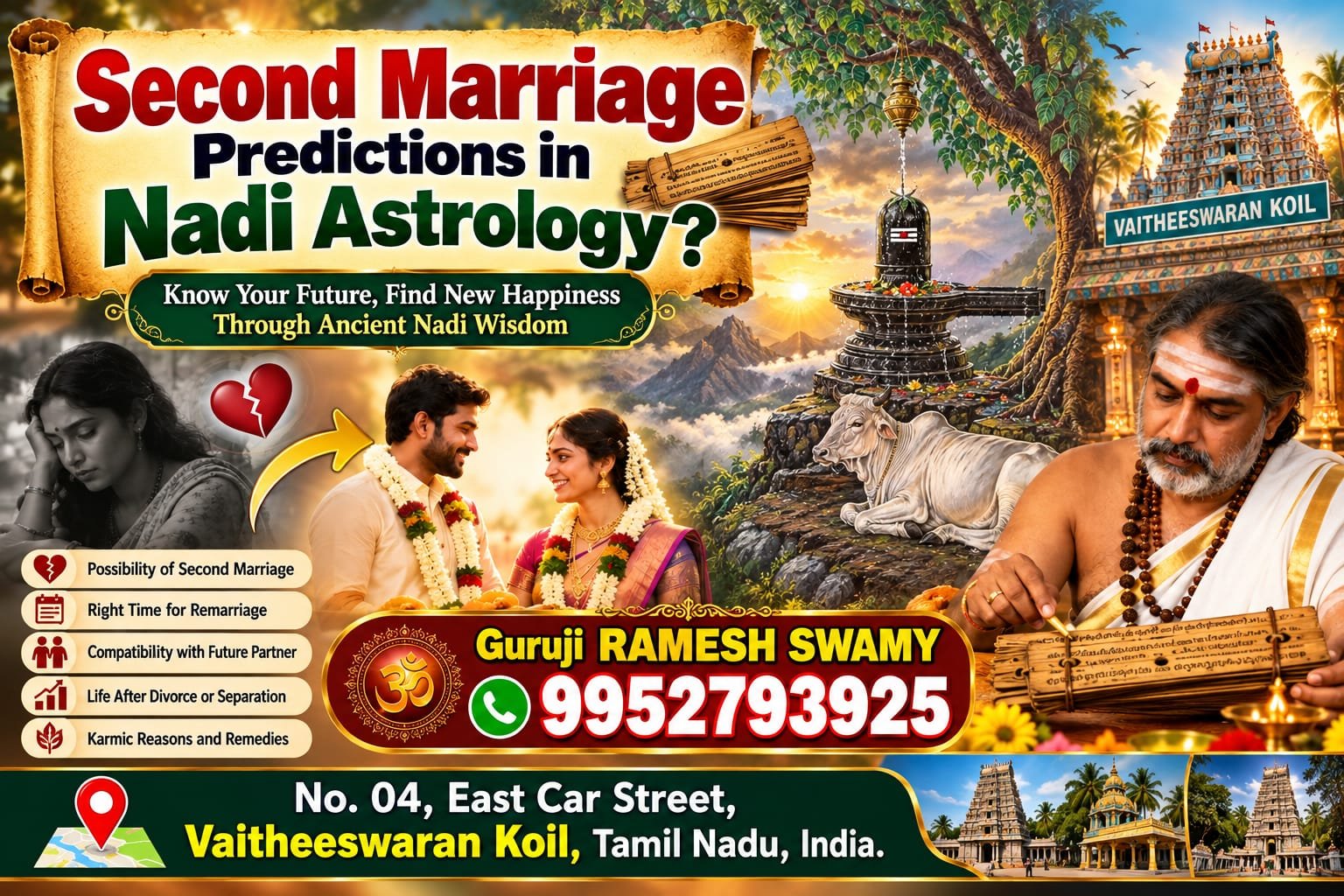
Second Marriage Predictions in Nadi Astrology?

Second Marriage Predictions in Nadi Astrology?

Second Marriage Predictions in Nadi Astrology is a subject that many people approach when life has taken an unexpected turn and they want greater clarity about relationships, remarriage, compatibility, and the possibility of building a peaceful new chapter. In the traditional understanding of Nadi Astrology, marriage is not viewed only as a social event; it is often interpreted through the broader ideas of karma, timing, personal responsibilities, emotional lessons, and the circumstances that bring two people together. A person who has experienced divorce, separation, the loss of a spouse, or a relationship that did not progress as expected may naturally have questions about whether another marriage is indicated, when a suitable period may arise, what kind of partner could enter their life, and what challenges may need careful attention before making another commitment. Nadi Astrology traditionally seeks to explore such questions through palm-leaf readings associated with ancient Siddhar traditions. During a Nadi consultation, the purpose is not simply to make a dramatic statement about the future, but to interpret the traditional indications recorded in the identified leaf and explain how they are understood in relation to the individual’s life journey. When the subject is a second marriage, the reading may discuss circumstances surrounding earlier relationships, possible reasons for delays or difficulties, opportunities for remarriage, the general nature of a future partnership, family circumstances, compatibility concerns, and periods traditionally considered significant for relationship decisions. These interpretations should be approached thoughtfully because personal choices, communication, maturity, family circumstances, and real-life compatibility remain important in any marriage. A Nadi reading may provide a spiritual or traditional perspective, but it should not replace a person’s own judgment when choosing a life partner. One interesting aspect of a second-marriage Nadi reading is its emphasis on understanding the past before focusing entirely on the future. When a previous marriage has ended, people may carry unanswered questions, disappointment, fear, or uncertainty into a new relationship. Traditional Nadi interpretations may describe such experiences in terms of karmic patterns and lessons, encouraging the individual to recognize what needs to change before entering another commitment. Rather than treating a second marriage as merely a replacement for the first, this perspective can frame it as a new stage of life that requires greater awareness and responsibility. The reading may also examine traditional indications related to the timing of remarriage. In astrology, timing is generally interpreted through planetary periods, combinations, and other traditional factors; in Nadi practice, the information is connected with what is interpreted from the relevant palm-leaf record. However, a predicted period should not be treated as a guarantee that a marriage must happen at a particular moment. Real-life circumstances such as meeting a compatible person, mutual consent, family responsibilities, education, career, finances, and emotional readiness can all affect when or whether a relationship progresses toward marriage. Another area that people frequently ask about is the personality or background of a future spouse. A traditional reading may offer broad indications concerning temperament, family environment, profession, direction or location, personal qualities, or circumstances through which a future relationship may develop. Such descriptions are better used as reflective guidance rather than as a checklist for identifying one predetermined person. Healthy relationships depend on mutual respect, honesty, communication, shared expectations, and the freedom of both people to make informed decisions. Compatibility is therefore especially important when considering remarriage. Someone entering a second marriage may already have responsibilities connected with children, parents, finances, property, or previous family arrangements. A new partner may also have their own history and responsibilities. A meaningful consultation should therefore encourage careful consideration of practical compatibility alongside traditional astrological interpretations. Discussing expectations about family roles, money, children, living arrangements, careers, and long-term goals can be just as important as examining spiritual or astrological compatibility. Nadi traditions may also refer to karmic obstacles or remedies when explaining relationship difficulties. Remedies are generally understood within a devotional and cultural framework and may include prayers, temple worship, charitable acts, or other traditional practices depending on the interpretation given. These practices can have spiritual meaning for believers, but they should not be presented as guaranteed methods for producing a marriage or controlling another person’s feelings. A relationship must always involve genuine consent and voluntary commitment from both individuals. For people interested in the traditional Nadi approach, the identification process itself is often an important part of the experience. Nadi Astrology is historically associated with palm-leaf manuscripts and with places such as Vaitheeswaran Koil in Tamil Nadu, where the tradition has become widely known. A consultation generally begins with a process intended to identify the appropriate leaf, after which relevant chapters or Kandams may be read according to the questions being explored. When marriage-related information is discussed, the astrologer may explain the traditional interpretation in understandable language and allow the seeker to consider how it relates to their circumstances. At Guruji Ramesh Swamy, enquiries about Nadi Astrology and traditional readings can be made at 9952793925, with the location listed as No. 04, East Car Street, Vaitheeswaran Koil, Tamil Nadu, India. People seeking information about second marriage may use a consultation to explore traditional perspectives on remarriage possibilities, relationship timing, compatibility, previous relationship patterns, and the responsibilities that could accompany a new partnership. At the same time, it is valuable to approach any prediction with a balanced mindset. Astrology can provide a cultural, spiritual, or reflective framework, but important decisions about marriage deserve careful personal consideration. If a reading suggests a favorable period, there is still value in taking enough time to know the prospective partner. If it suggests challenges or delays, that does not mean a person should lose hope or believe that their future is permanently fixed. Human relationships develop through countless choices and circumstances that cannot responsibly be reduced to a single prediction. For someone considering remarriage, perhaps the most constructive way to use a Nadi reading is as one source of reflection: understanding the past, thinking clearly about what they want from a future relationship, recognizing responsibilities, and approaching a new partnership with patience and awareness. A second marriage can represent a significant transition, and people may naturally hope that it brings stability, companionship, understanding, and renewed happiness. Traditional Nadi Astrology offers its own distinctive spiritual perspective on that journey, connecting ideas of karma, destiny, timing, and personal experience through the symbolism of ancient palm-leaf traditions. Whether a person consults Nadi Astrology out of faith, cultural interest, curiosity, or a desire for direction, the most meaningful approach is to combine that traditional guidance with thoughtful real-world decisions, mutual respect, open communication, and realistic expectations. In this way, Second Marriage Predictions in Nadi Astrology can be understood not simply as an attempt to know exactly what will happen, but as an opportunity to reflect on where one has been, what one has learned, and how one wishes to approach the possibility of a new relationship and a new beginning.
Marriage Compatibility Through Agastya Nadi

Marriage Compatibility Through Agastya Nadi?

Marriage is one of the most meaningful journeys in human life because it brings together not only two individuals but also their families, responsibilities, expectations, emotions, values, and hopes for the future. In the traditional belief system associated with Agastya Nadi Astrology, marriage compatibility is viewed as an important part of understanding how two people may share their life journey. Agastya Nadi is connected with the ancient palm-leaf tradition in which seekers believe that certain aspects of a person’s life were recorded by sages and preserved through generations. Vaitheeswaran Koil in Tamil Nadu is widely associated with the tradition of Nadi Astrology, and people interested in this practice often visit the area to learn about their palm-leaf readings. In the traditional Nadi identification process, thumb-impression patterns are commonly used to narrow down groups of palm leaves, followed by a question-and-answer process intended to identify a matching leaf. Once a leaf is considered to have been identified, a reading may cover different areas of life, including education, career, family responsibilities, marriage, relationships, financial matters, spiritual interests, and future life phases. When the subject is Marriage Compatibility Through Agastya Nadi, the reading may traditionally explore themes connected with marriage, the nature of a future spouse, possible periods associated with marriage, family circumstances, relationship responsibilities, and challenges that a person may encounter in married life. Followers of this tradition believe that every individual travels through life with a unique karmic path and that marriage can become an important part of that journey. From this perspective, compatibility is not understood simply as whether two horoscope charts match perfectly. It can also involve how two individuals understand each other, communicate, handle responsibilities, respect their families, manage disagreements, and support one another through changing circumstances. Traditional Nadi interpretations may also discuss what astrology describes as doshas or other influences that are believed to create difficulties or delays in marriage. In some readings, traditional prayers, temple worship, charitable acts, or other spiritual practices may be suggested according to the beliefs associated with the reading. Such practices belong to religious and astrological traditions and should be understood as matters of faith rather than scientifically established methods for predicting or changing relationship outcomes. A healthy marriage ultimately depends on the choices and behaviour of the people involved. Love, trust, patience, honest communication, mutual respect, emotional maturity, shared responsibility, and the willingness to understand each other are among the practical foundations of a strong relationship. For this reason, an Agastya Nadi reading can be approached as a traditional or spiritual form of guidance rather than as an unquestionable decision about whom someone must or must not marry. Before marriage, couples can benefit from openly discussing their expectations regarding family life, careers, finances, children, living arrangements, personal boundaries, responsibilities, and long-term goals. These conversations can reveal areas where their expectations are similar as well as areas where compromise and greater understanding may be necessary. A traditional compatibility reading may give people another perspective from which to reflect on these questions, but it cannot guarantee that a marriage will be happy or unsuccessful. Even when an astrological interpretation describes favorable compatibility, a relationship still requires continuous care and effort from both partners. Likewise, an interpretation that mentions possible challenges does not automatically mean that a relationship is destined to fail. People grow, circumstances change, and couples can learn better ways to communicate and solve problems together. This is an important way to understand the role of astrology without allowing fear to control major life decisions. Within the Agastya Nadi tradition, palm leaves are valued as part of an ancient spiritual heritage, and their connection with sages such as Agastya gives the practice special cultural importance to believers. The image of ancient manuscripts, temple lamps, sacred symbols, and Vaitheeswaran Koil reflects this long-standing spiritual atmosphere. For people who respect this tradition, receiving a Nadi reading can therefore be more than simply asking what will happen in the future; it can also become an opportunity for self-reflection. Questions about marriage may encourage a person to consider what qualities they expect from a partner, what responsibilities they are prepared to accept, how they respond to disagreements, and what kind of family life they hope to create. Marriage compatibility should therefore be understood broadly. Similar values can be important, but compatibility also includes the ability to respect differences. Two people do not need to think exactly alike in every situation to build a meaningful relationship. What matters greatly is whether they can listen to each other, communicate without unnecessary hostility, respect personal boundaries, make important decisions together, and remain supportive during difficult periods. Financial planning is another practical area that couples should discuss because differences in spending habits, saving priorities, debts, or financial expectations can become sources of tension when they are ignored. Family expectations can also influence married life, especially when two families have different traditions or lifestyles. Discussing these matters openly before marriage can help couples develop clearer expectations. Agastya Nadi marriage readings may be meaningful to people who wish to combine such practical considerations with their traditional spiritual beliefs. Those interested in learning about the traditional Nadi Astrology approach to marriage compatibility in Vaitheeswaran Koil may contact Guruji Ramesh Swamy – 9952793925, No. 4, East Car Street, Vaitheeswaran Koil, Tamil Nadu, India. A responsible approach is to treat the reading as guidance within a traditional belief system while keeping personal judgment, mutual consent, practical compatibility, and open communication at the centre of marriage decisions. Ultimately, a successful marriage is not created by a prediction alone. It is built gradually through everyday actions: speaking with kindness, listening carefully, respecting each other’s individuality, sharing responsibilities, remaining trustworthy, supporting one another during difficult moments, celebrating achievements together, and growing as partners over time. Marriage Compatibility Through Agastya Nadi can therefore be seen as a traditional way of exploring questions about relationships, karma, marriage, and family life while remembering that the most important decisions about marriage belong to the two people who will share that life together.

How to Nullify Sevvai Dosham (Mangal Dosha)

How to Nullify Sevvai Dosham (Mangal Dosha)

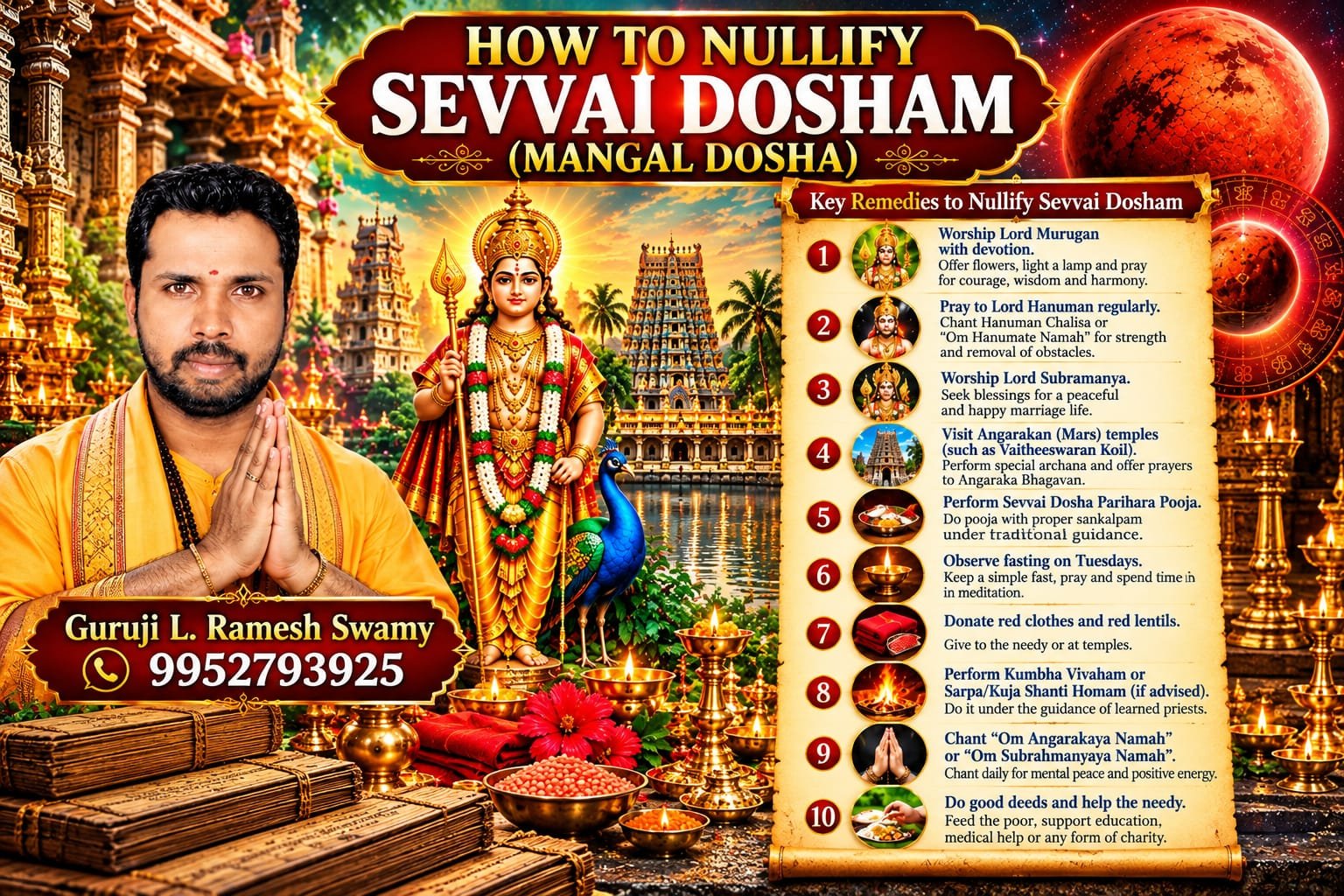
In traditional Vedic astrology, Sevvai Dosham, also known as Mangal Dosha or Kuja Dosha, is associated with the placement of Mars in particular houses of a person’s birth chart, and traditional practitioners believe that its influence may be reflected in areas such as marriage, relationships, emotional harmony, patience, family understanding, and the way a person responds to conflict; however, Sevvai Dosham should not automatically be viewed as a sign that marriage will fail or that difficulties are unavoidable, because a complete horoscope contains many planetary combinations, strengths, aspects, and balancing influences that should be considered together before any conclusion is reached. According to traditional astrological practice, one of the most important first steps is therefore to have the birth chart carefully examined rather than relying only on a general statement that Mars is placed in a certain house. Guruji Ramesh Swami – 9952793925 explains Sevvai Dosham remedies from a traditional spiritual perspective and emphasizes that remedies are generally intended to encourage devotion, discipline, patience, positive thinking, charity, and harmony rather than fear. Worship of Lord Murugan or Lord Subramanya is one of the practices traditionally associated with Mars-related remedies because Murugan represents courage, wisdom, disciplined action, and the ability to overcome obstacles. Devotees may offer sincere prayers, light a traditional oil lamp, visit a Murugan temple, and spend a few quiet moments reflecting on the qualities they wish to develop in their own lives. Tuesday is traditionally connected with Mars, and some devotees choose Tuesday for special prayers or simple spiritual observances. Rather than treating these practices as a guaranteed way of changing future events, they can be approached as meaningful religious traditions that encourage self-control, calmness, gratitude, and responsible action. Some families also visit temples traditionally associated with Angaraka, the planetary representation of Mars, and Vaitheeswaran Koil in Tamil Nadu is especially connected in popular tradition with Angaraka worship. Temple visits may include archana, lighting lamps, offering flowers, participating in permitted poojas, and praying for peace and understanding in family life. Another commonly followed tradition is Sevvai Dosha Parihara Pooja, which is usually performed according to the customs of the particular temple or family tradition. Some people also participate in homam or other Vedic ceremonies when recommended by a knowledgeable priest or traditional practitioner. These ceremonies are religious observances, so the exact method can differ according to temple customs, family traditions, and the individual horoscope; therefore, there is no need to assume that every person identified as having Sevvai Dosham must perform the same ritual. Mantra chanting is another practice followed by some devotees. Traditional prayers connected with Angaraka, Murugan, or Subramanya may be recited with concentration and devotion, but the deeper purpose of regular prayer can also be understood as developing steadiness, patience, and clarity in everyday life. Charity is equally important in many spiritual traditions. Helping people who need food, education, clothing, medical assistance, or other genuine support can turn a remedy into an act that has a direct positive effect on another person’s life. Some traditional customs mention donating red-colored items or food associated symbolically with Mars, yet the most meaningful principle behind donation is generosity without expecting something in return. Feeding people in need, supporting a useful community activity, caring for elderly family members, helping students, and treating workers respectfully are simple examples of good deeds that can be practiced regularly. Fasting on Tuesdays is another traditional observance, but it should never be treated as compulsory, especially for children, teenagers, pregnant people, or anyone for whom fasting may not be appropriate; prayer, kindness, and other safe spiritual observances can be chosen instead. In marriage-related astrology, some traditions also discuss ceremonies such as Kumbha Vivaham in specific circumstances, but such practices should not be performed merely because someone has heard that they have Mangal Dosha. If a family follows such a custom, it is sensible to understand its religious meaning and seek appropriate traditional guidance before deciding whether it is relevant. Most importantly, astrology should not create fear between a prospective bride and groom or their families. Horoscope matching is only one traditional consideration, while communication, mutual respect, honesty, shared expectations, emotional maturity, family understanding, education, financial responsibility, and willingness to solve disagreements peacefully are practical factors that strongly shape married life. A person concerned about Sevvai Dosham can therefore combine spiritual practices with constructive personal habits: avoiding unnecessary anger, speaking respectfully during disagreements, learning to listen before reacting, keeping promises, respecting boundaries, managing money responsibly, and approaching marriage decisions patiently rather than under pressure. From a spiritual viewpoint, remedies become more meaningful when prayer is accompanied by improvement in character and conduct. Lighting a lamp has symbolic value, but bringing patience into a difficult conversation gives that symbolism practical meaning; visiting a temple can offer peace, while carrying that peaceful attitude into family relationships gives the visit a continuing purpose; chanting a mantra may calm the mind, while using that calmness to make thoughtful decisions can benefit everyday life. Guruji Ramesh Swami – 9952793925 may be mentioned for those seeking traditional astrological guidance, but individuals should still ask questions, understand any suggested ritual clearly, and make their own informed decisions without fear or pressure. No responsible interpretation should promise that one ceremony will guarantee marriage, wealth, happiness, or the complete removal of every future difficulty. Astrology and parihara practices belong to systems of religious and cultural belief, and their effects are matters of faith rather than scientifically established guarantees. For devotees who value these traditions, Sevvai Dosham remedies can instead be understood as a structured spiritual path centered on worship, self-discipline, charity, reflection, family harmony, and responsible behavior. When approached with this balanced understanding, the focus shifts away from anxiety about Mars and toward qualities traditionally associated with using strong energy positively—courage without aggression, confidence without arrogance, determination without impatience, and strength guided by compassion. Whether one chooses Murugan worship, Angaraka temple prayers, Tuesday observances, charitable activities, traditional pooja, mantra recitation, or simply regular sincere prayer, these practices are most constructive when they inspire a calmer mind and kinder actions. Ultimately, the purpose of any spiritual remedy should be to encourage hope and responsibility rather than fear, allowing individuals and families to respect their traditions while making important decisions thoughtfully, peacefully, and with mutual understanding.

Vastu Shastra Consultation – Understanding Traditional Principles of Space

Vastu Shastra Consultation – Understanding Traditional Principles of Space

Vastu Shastra is an ancient Indian tradition associated with architecture, orientation, spatial planning, and the arrangement of buildings. A Vastu Shastra Consultation applies these traditional concepts to a particular property.

The consultation may begin by studying the orientation of the site or building. The main entrance, internal divisions, room placement, circulation areas, and functional zones may then be examined.

Different properties require different approaches. A family home has different practical needs from an office, shop, factory, or vacant plot. Personalized analysis therefore helps relate traditional Vastu concepts to the actual use of the property.

Vastu consultation may be considered during plot selection, architectural planning, interior arrangement, renovation, or the review of an existing property. Early consultation can be helpful for people who want Vastu preferences considered before construction begins.

Traditional Vastu principles should be balanced with modern requirements. Structural stability, climate, ventilation, daylight, energy efficiency, accessibility, sanitation, fire safety, local laws, and budget are essential considerations in any building project.

Vastu Shastra is part of a traditional belief system, and claims that particular arrangements guarantee health, prosperity, relationships, or financial success are not scientifically established.

A Vastu Shastra Consultation can nevertheless be meaningful for individuals who value the tradition. The most balanced approach is to integrate those preferences with professional architecture, engineering, safety standards, and the practical requirements of the people who will actually use the space.

Business Vastu Consultation – Traditional Planning for Commercial Spaces

Business Vastu Consultation – Traditional Planning for Commercial Spaces

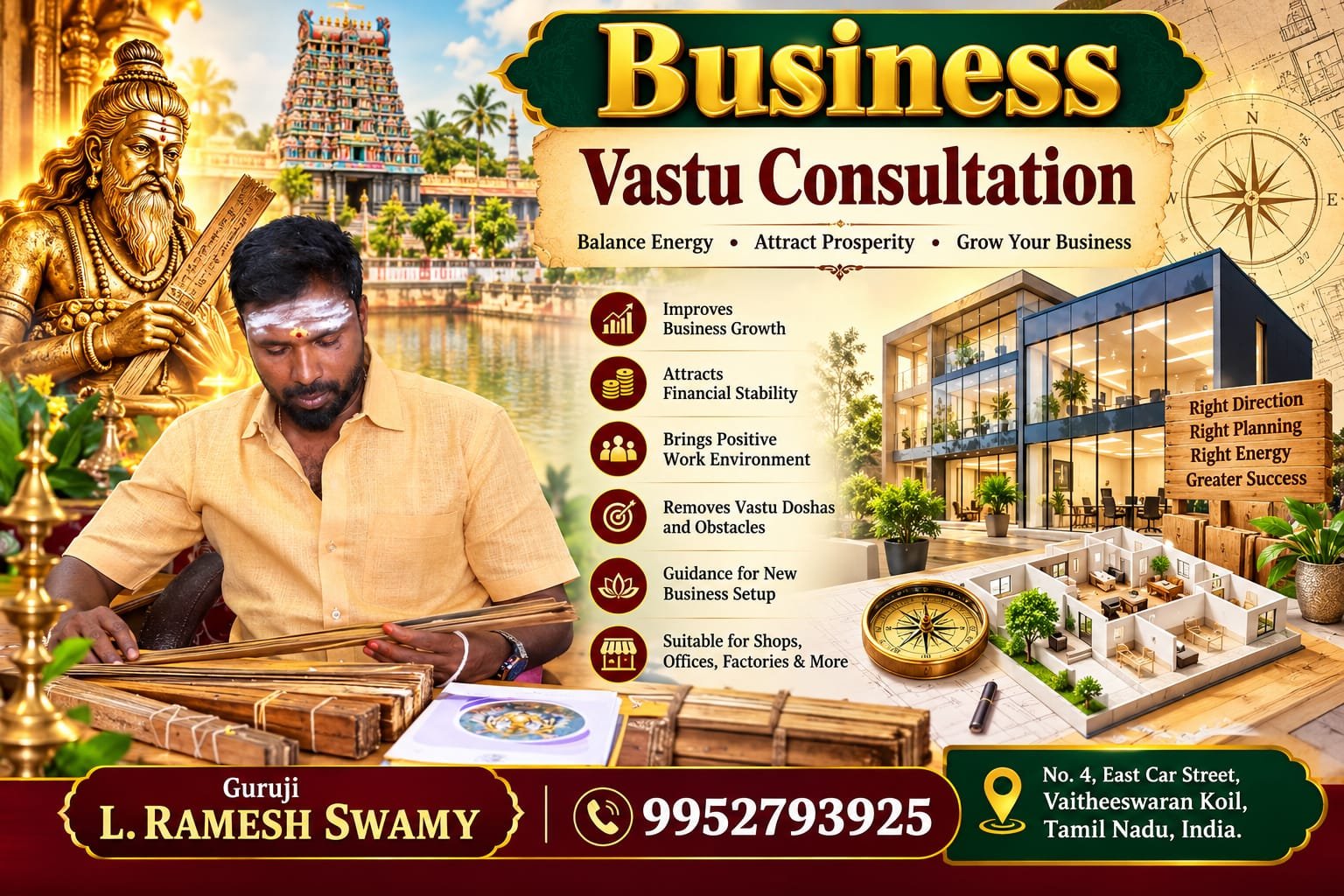
Business Vastu Consultation applies traditional Vastu Shastra principles to commercial properties. It may be requested for offices, shops, showrooms, service centers, warehouses, factories, or other business premises.

The consultation usually begins with an examination of the property’s direction, entrance, internal layout, and functional zones. Depending on the nature of the business, traditional analysis may consider customer areas, management spaces, staff work areas, billing counters, storage sections, machinery locations, or meeting spaces.

Every business property is different. A retail shop, professional office, manufacturing unit, and restaurant all have different operational requirements. Therefore, a personalized consultation should consider the actual function of the property rather than relying solely on generic recommendations.

For businesses moving into new premises, a Vastu review can be conducted before finalizing the interior layout. Existing commercial spaces can also be evaluated to understand how their current arrangement relates to traditional Vastu principles.

Vastu cannot guarantee sales, profits, customer growth, or business success. These outcomes are influenced by market conditions, management, pricing, product quality, service, location, competition, marketing, and financial decisions.

Safety and legal requirements should always take priority. Structural modifications should be reviewed by qualified architects or engineers, and commercial properties should comply with relevant building and fire regulations.

Business Vastu Consultation can be useful for entrepreneurs who wish to incorporate traditional spatial principles into their commercial environment while continuing to base business decisions on sound planning and real-world information.

Office Vastu Consultation – Traditional Vastu Guidance for Workspaces

Office Vastu Consultation – Traditional Vastu Guidance for Workspaces

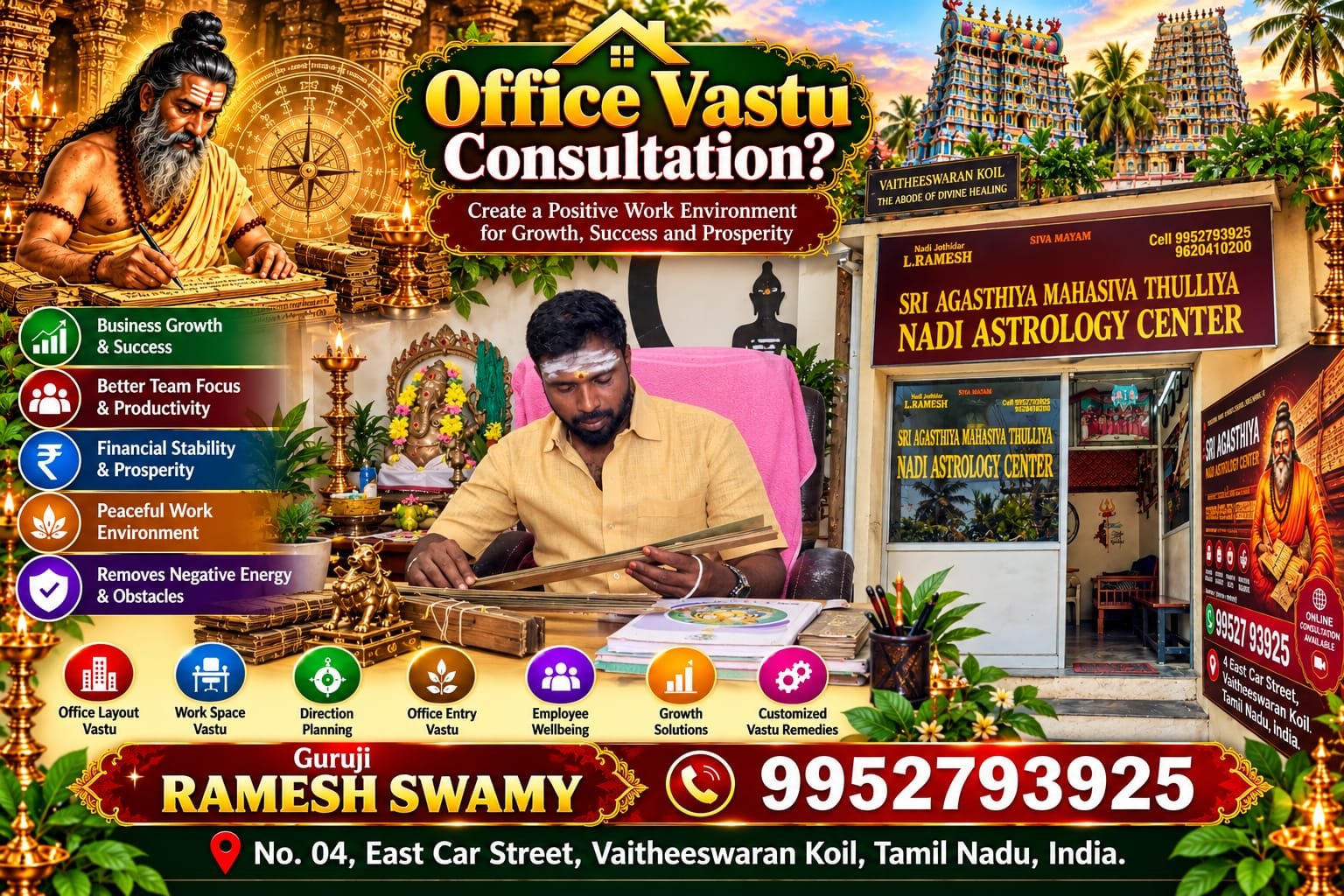
An office needs to support productivity, communication, comfort, safety, and efficient daily operations. Office Vastu Consultation examines a workplace according to traditional Vastu Shastra principles while considering how different areas of the office are being used.

The analysis may include the office entrance, reception, management cabins, employee workstations, meeting rooms, storage areas, pantry, washrooms, and other functional spaces. Directions and orientation are traditionally considered when interpreting the layout.

A consultation can be undertaken for an existing office or during the planning of a new workplace. When the property is still at the design stage, traditional Vastu preferences can be discussed alongside practical architectural planning.

Existing offices do not necessarily need extensive reconstruction merely because a particular feature differs from a traditional recommendation. Practical adjustments may sometimes be considered depending on the layout and circumstances.

Business performance cannot be guaranteed through Vastu. Productivity and organizational success depend on many factors, including leadership, employee wellbeing, customer demand, financial management, operational systems, technology, marketing, and the quality of products or services.

Similarly, workplace design should comply with fire safety, accessibility, structural, electrical, ventilation, and local regulatory requirements.

Office Vastu Consultation is best understood as a traditional spatial guidance service. For organizations and professionals who value Vastu traditions, it can provide another perspective when planning or reviewing a workspace while sound business management and professional design remain essential.

35

Home Vastu Consultation – Traditional Guidance for a Thoughtfully Planned Home

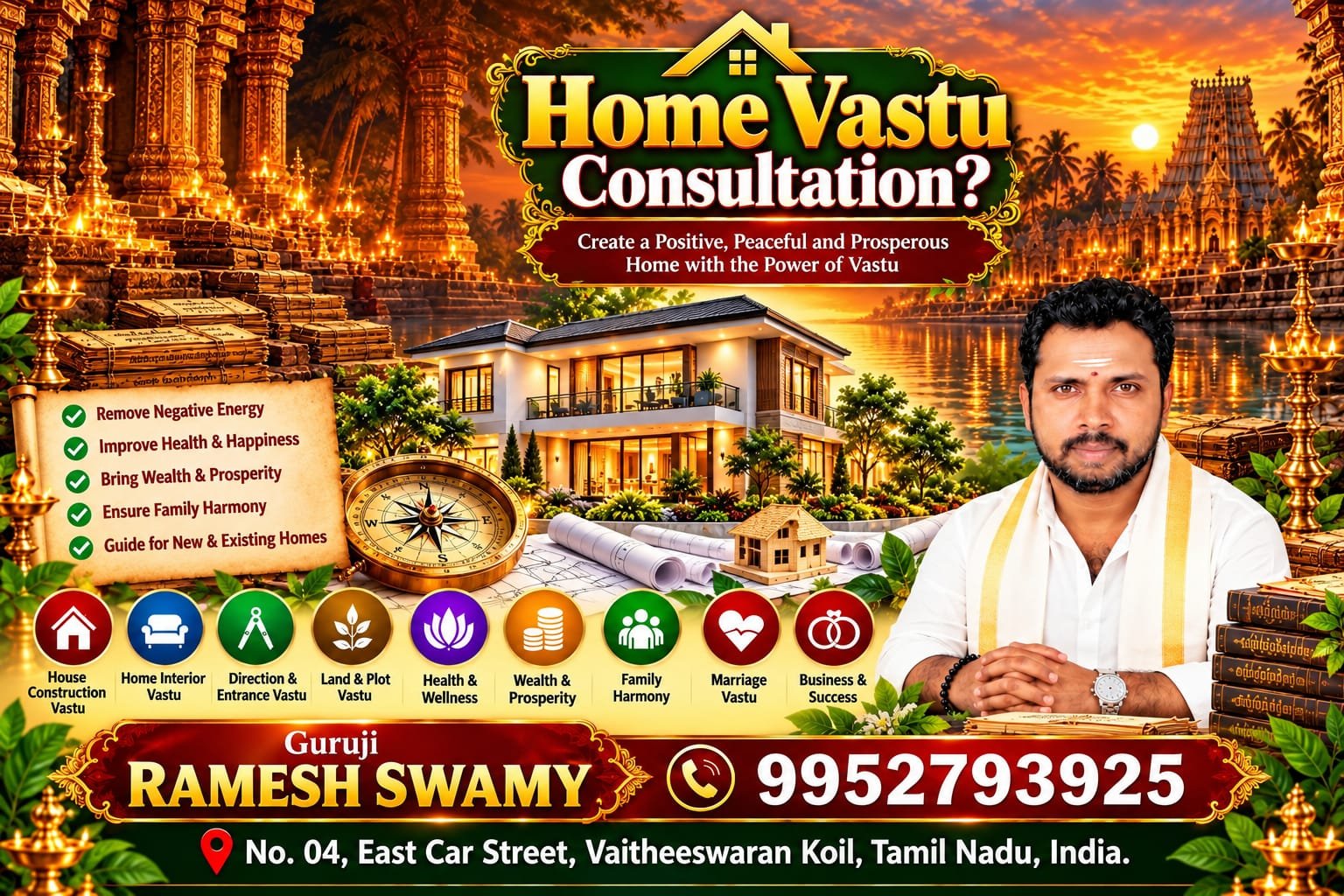
A home is more than a physical structure. It is where families rest, communicate, celebrate, work, and spend a significant part of everyday life. Home Vastu Consultation applies traditional Vastu Shastra principles to residential spaces.

The consultation generally begins with an understanding of the property’s orientation and floor plan. The location of the main entrance, kitchen, bedrooms, living room, prayer area, bathrooms, staircase, and other spaces may then be examined from a traditional Vastu perspective.

For a new home, consulting during the design stage can make it easier to consider Vastu preferences alongside architectural requirements. For an existing property, the focus may instead be on understanding the present layout and identifying practical adjustments that do not require unnecessary structural alterations.

Good residential planning should always extend beyond Vastu considerations. Natural ventilation, adequate daylight, privacy, accessibility, electrical safety, water management, structural integrity, and the practical needs of family members are extremely important.

Traditional Vastu recommendations can vary depending on the school of practice and the property’s actual layout. Therefore, generic rules found online may not always suit every building.

Vastu Shastra is a traditional architectural belief system and is not scientifically proven to guarantee prosperity, health, or particular life outcomes. Major renovations should always be evaluated with qualified architects, engineers, and other appropriate professionals.

A personalized Home Vastu Consultation can help homeowners understand traditional principles in relation to their actual property while maintaining a practical approach to comfort, safety, and everyday living.

Vastu Consultation – Traditional Guidance for Your Space

Vastu Consultation – Traditional Guidance for Your Space

Vastu Shastra is a traditional Indian architectural system concerned with the planning and arrangement of spaces. A Vastu Consultation examines a property from the perspective of traditional Vastu principles and provides recommendations based on factors such as direction, layout, room placement, entrances, and functional use of space.

A consultation may be requested for a home, office, business premises, shop, plot, or proposed construction project. Depending on the property and the type of consultation, information such as the floor plan, orientation, entrance direction, room locations, and surrounding environment may be reviewed.

For residential properties, traditional Vastu analysis may consider the entrance, kitchen, bedrooms, living areas, prayer space, bathrooms, and other important sections. Commercial consultations may focus on entrances, work areas, cabins, customer spaces, storage, and overall layout.

One benefit of consulting before construction is that suggestions can be considered during the planning stage. Existing properties can also be reviewed, although structural changes should only be undertaken after considering engineering, architectural, safety, legal, and financial requirements.

Vastu Shastra is rooted in traditional beliefs and should not be presented as a scientifically proven method for guaranteeing health, wealth, happiness, or business success. Practical design principles such as ventilation, natural light, accessibility, fire safety, structural stability, comfort, and local building regulations remain essential.

A Vastu Consultation can therefore be approached as traditional guidance that complements, rather than replaces, professional architectural and engineering advice.