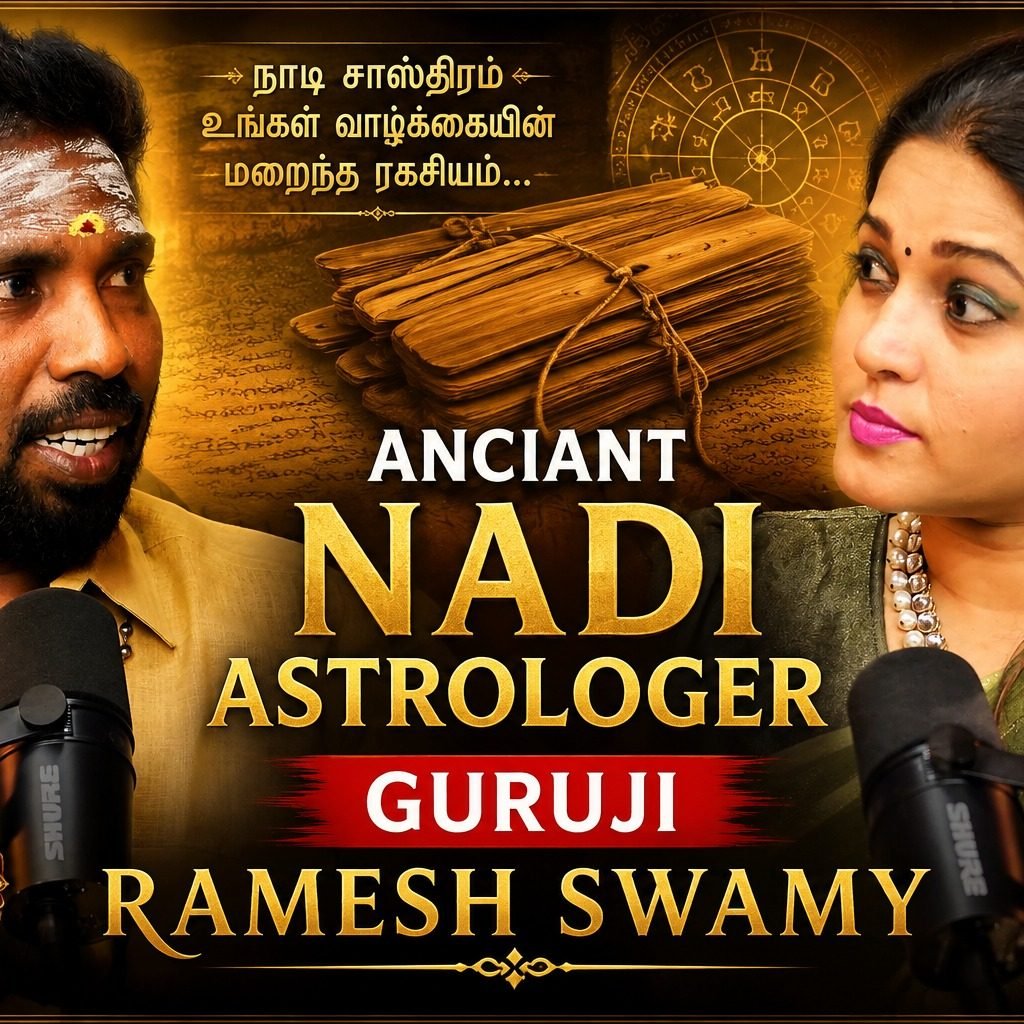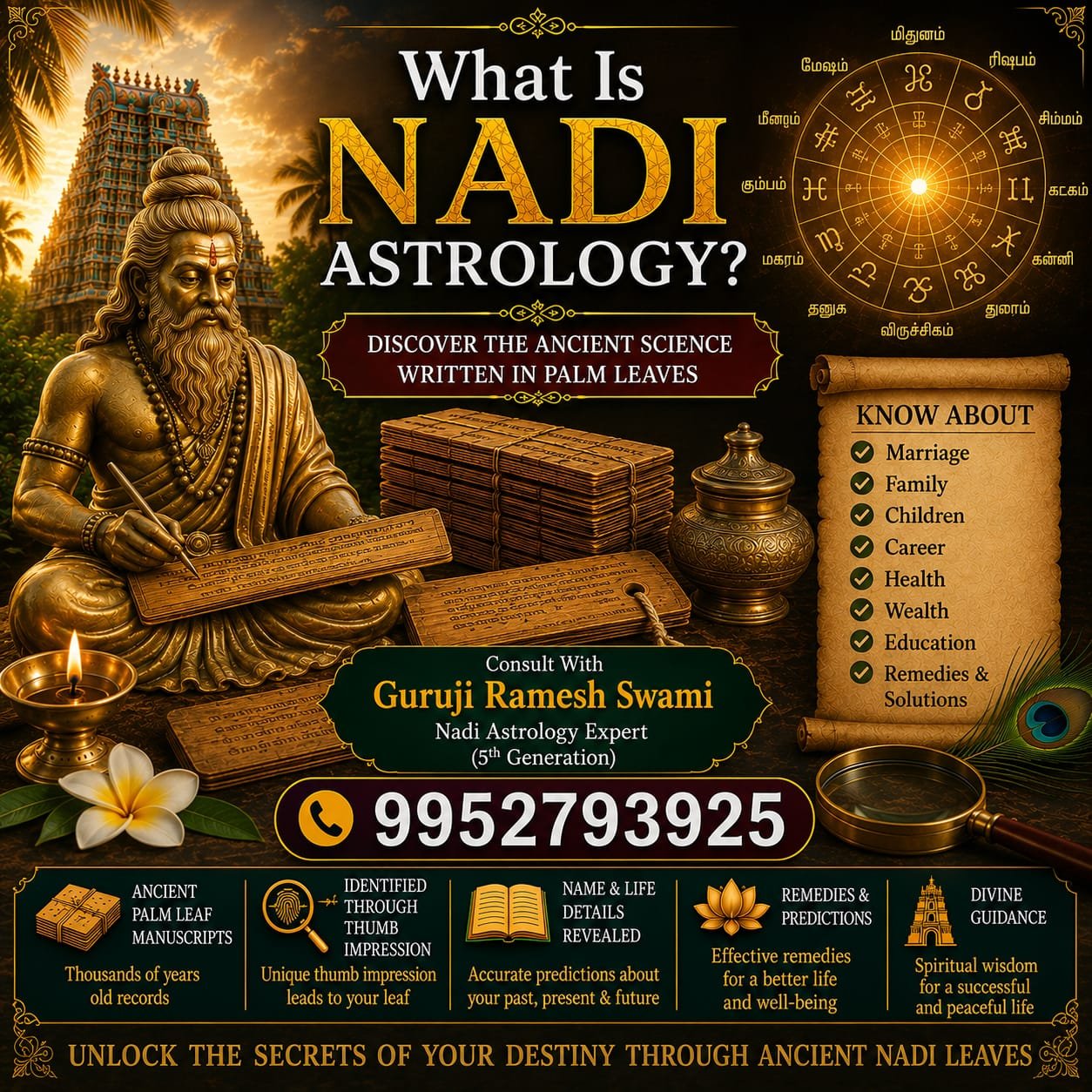
Nadi Astrology is an ancient form of astrology traditionally associated with the Tamil region of South India. It is known for its unique connection with palm-leaf manuscripts, which are believed by practitioners to contain information about the lives of individuals who may seek their readings. The word “Nadi” is often associated with the idea of a path or journey, and Nadi Astrology is traditionally presented as a way of exploring a person’s life journey, past experiences, present circumstances, and possible future developments. Unlike modern horoscope readings that generally begin with a person’s date, time, and place of birth, traditional Nadi Astrology is closely connected with the identification and interpretation of palm-leaf manuscripts. Over the years, this traditional practice has attracted curiosity from people in India and from different parts of the world.
At the heart of Nadi Astrology is the tradition of palm-leaf manuscripts. According to the traditional belief, these manuscripts were written many generations ago by ancient sages. Practitioners believe that the leaves contain information relating to individuals who are destined to seek them at some point in their lives. The manuscripts are traditionally written in ancient Tamil scripts and require specialized knowledge to read and interpret. It is important to understand that these are traditional beliefs associated with Nadi Astrology, and people may have different views about their historical and spiritual significance. For many visitors, however, the experience is less about simply predicting the future and more about exploring an ancient cultural and spiritual tradition.
One of the most interesting aspects of Nadi Astrology is the process of identifying a relevant palm leaf. In traditional practice, a person may provide certain basic information, and the practitioner may use a thumb impression as part of the identification process. The practitioner then works through groups or sections of palm leaves in an attempt to identify the leaf believed to correspond to the individual. This process can take time, and the experience may vary depending on the tradition followed by the practitioner. Once a suitable manuscript is identified, the practitioner interprets the information recorded on it and explains it to the individual.
Nadi Astrology is often discussed in connection with different areas of life. A reading may traditionally cover subjects such as family, education, career, relationships, marriage, finances, spiritual interests, and important stages of life. Some traditions also discuss past circumstances and possible future developments. The exact topics covered can depend on the particular Nadi tradition, practitioner, and manuscript. Rather than viewing a Nadi reading as a guaranteed prediction, many people choose to approach it as a traditional form of guidance and reflection.
Another reason Nadi Astrology continues to attract attention is its connection with Tamil heritage. Tamil Nadu has a long history of literary, spiritual, and cultural traditions, and palm-leaf manuscripts form an important part of India’s broader manuscript heritage. Before modern printing and digital technology, palm leaves were used to preserve various forms of knowledge. Nadi manuscripts are therefore interesting not only to people interested in astrology but also to those who are curious about traditional manuscripts and South Indian culture.
For someone who has never experienced Nadi Astrology before, the process may seem quite different from a regular horoscope consultation. In conventional astrology, an astrologer usually prepares a birth chart based on details such as date, time, and place of birth. In Nadi Astrology, the traditional focus is on locating and interpreting a particular palm-leaf manuscript. This difference is one of the main reasons people become curious about Nadi readings. It creates an experience that combines traditional manuscript reading, astrology, interpretation, and personal conversation.
Today, Nadi Astrology is no longer limited to people who can physically travel to a traditional reading center. With the growth of digital communication, online Nadi Astrology services have become available to people living in different cities and countries. Online sessions can make it easier for people who are interested in the tradition but are unable to visit a practitioner in person. Depending on the service, the process may involve communication through a phone call, video consultation, or other digital methods. The exact process can vary, so anyone considering an online session should understand clearly how the service works before beginning.
The growing interest in online Nadi Astrology also shows how an ancient tradition can find a place in the modern world. People today may live thousands of kilometers away from Tamil Nadu but still have an interest in traditional Indian practices. Technology allows conversations and consultations to take place across geographical boundaries. At the same time, it is important to remember that the online format does not necessarily mean that every service follows the same traditional process. Anyone interested in Nadi Astrology should take time to understand the background, approach, and process of the particular practitioner or service they choose.
People approach Nadi Astrology for many different reasons. Some are simply curious about an ancient tradition. Others may have questions about career, relationships, family, or important changes in their lives. Some may be interested because they have heard about Nadi Astrology from friends or relatives. Others may come across stories about it online and want to experience it for themselves. There is no single reason why people become interested in Nadi Astrology. For some, it is a spiritual experience; for others, it is cultural curiosity; and for many, it is simply an opportunity to reflect on their lives and the choices they are making.
It is also worth understanding that Nadi Astrology should not be treated as a replacement for practical decision-making. Important choices relating to education, career, finances, relationships, or personal wellbeing are best considered carefully using reliable information and, where appropriate, advice from qualified professionals. A traditional astrology reading can be viewed by those who choose it as a source of personal reflection or spiritual guidance, but it should not be treated as a guaranteed statement about what will happen.
One of the most appealing parts of Nadi Astrology is the sense of connection between the past and the present. The idea that ancient palm-leaf manuscripts have survived across generations creates a fascinating cultural story. Whether a person approaches the tradition from a spiritual perspective, a cultural perspective, or simple curiosity, the history surrounding these manuscripts can be an interesting subject to explore.
Nadi Astrology also raises an important question about why people have always wanted to understand their lives and their future. Across different cultures and generations, people have searched for ways to make sense of uncertainty. Astrology, spiritual traditions, philosophy, and storytelling have all played roles in helping people think about their lives. Nadi Astrology is one example of this larger human interest in understanding where we come from, where we are now, and what may lie ahead.
For beginners, the best way to approach Nadi Astrology is with an open but thoughtful mind. It can be useful to learn about its history, understand the traditional process, ask questions, and avoid making assumptions based only on stories or advertisements. Different people may have very different experiences, and personal experiences should not automatically be treated as proof of universal claims.
In simple terms, Nadi Astrology is a traditional South Indian astrological practice closely associated with ancient palm-leaf manuscripts and the belief that these manuscripts may contain information about individual life journeys. Its combination of astrology, manuscript tradition, Tamil cultural heritage, and spiritual curiosity has made it a subject of interest for generations. Today, the availability of online services has made it easier for people around the world to learn about and experience this tradition. Whether someone approaches Nadi Astrology as a spiritual practice, a cultural tradition, or simply something they are curious about, understanding its background and traditional process is the best place to begin.
Ultimately, Nadi Astrology is more than just a question about predicting the future. For many people, it represents a journey of curiosity and self-reflection connected to an ancient tradition. Learning about Nadi Astrology can open the door to a fascinating part of Tamil heritage while also encouraging people to think about their own lives, experiences, choices, and hopes for the future.