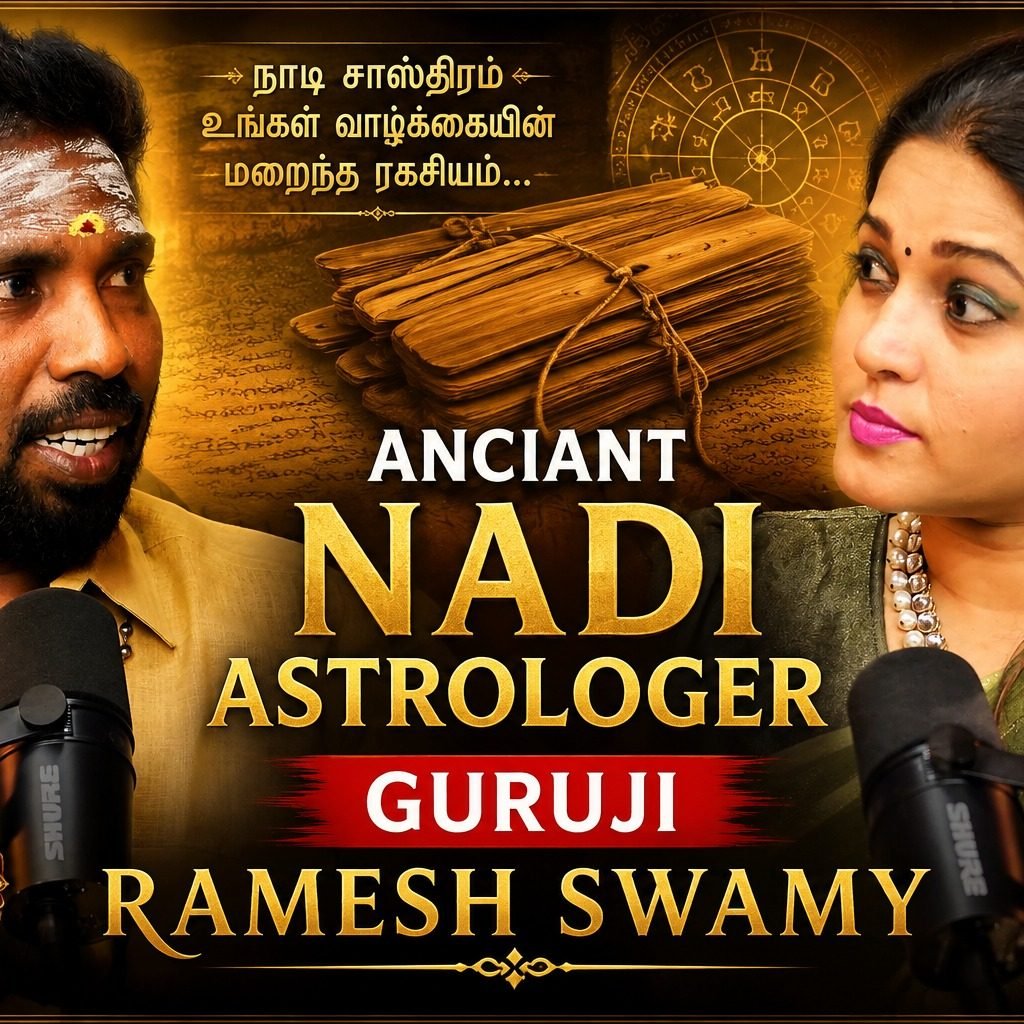
Nadi Astrology is an ancient Indian spiritual tradition based on palm leaf manuscripts that are believed to contain guidance about the lives of individuals. These manuscripts, traditionally associated with great sages such as Agasthiyar, are said to have been written many centuries ago and preserved through generations. Unlike regular horoscope astrology, Nadi Astrology follows a unique method in which the seeker’s palm leaf is identified through a traditional matching process. In many Nadi centres, the right thumb impression is commonly taken for men and the left thumb impression for women. Based on the thumb pattern, groups of palm leaves are searched, and the reader begins a question-and-answer process to identify the manuscript that closely matches the person’s personal and family details.
The ancient palm leaves used in Nadi Astrology are often called “Olai Chuvadi” in Tamil. They were traditionally prepared from dried and processed palm leaves, and the writings were inscribed using a sharp instrument. The text found on these manuscripts is usually in old Tamil scripts or traditional poetic forms, which require knowledge and experience to read and interpret. Over time, many of these manuscripts have been copied, preserved, and handed down through families that continue the tradition of Nadi reading. Vaitheeswaran Koil in Tamil Nadu is especially well known for Nadi Astrology and attracts visitors from different parts of India and from abroad who are interested in understanding this ancient form of palm leaf guidance.
A Nadi Astrology consultation usually begins with the search for the correct palm leaf. The process does not normally start by simply reading a horoscope from the date of birth. Instead, the Nadi reader uses the thumb impression to identify a particular category of palm leaves. From that group, several leaves may be examined one by one. Statements or questions are read from the leaves, and the seeker answers only with simple confirmations such as “yes” or “no.” The process continues until a leaf is found that contains details believed to correspond closely with the seeker’s life. These details may include information about parents, siblings, marital status, occupation, important life events, and other personal circumstances.
Once the correct leaf is identified, the general reading may begin. This main section is often called the General Kandam. It may provide a broad overview of different areas of life, including family, education, profession, marriage, finance, children, health, spiritual development, and important phases of life. Depending on the individual’s interest, additional Kandams or chapters may also be read. Some chapters traditionally focus on marriage, career, children, education, health, property, spiritual development, past karma, remedies, and other specific areas of life.
One of the important ideas connected with Nadi Astrology is karma. According to traditional belief, the experiences of the present life may be connected with actions from the past. Nadi readings often discuss life circumstances from a karmic point of view and may suggest spiritual practices or remedies known as Pariharam. These remedies can include temple visits, prayers, charity, mantra recitation, or other traditional practices. They are generally intended as spiritual guidance and should be understood within the cultural and religious tradition from which Nadi Astrology developed.
Agasthiya Nadi is one of the most widely known forms of Nadi Astrology. Sage Agasthiyar holds an important place in Tamil spiritual tradition and is associated with many ancient teachings. Other forms of Nadi reading may also be known by names such as Siva Nadi, Sukshma Nadi, and Thulliya Nadi. Each tradition may follow its own method of reading, interpretation, and presentation. The availability of particular manuscripts and chapters can also differ from one Nadi centre to another.
Nadi Astrology is often considered different from conventional Vedic astrology because of the way the information is accessed. In a normal horoscope consultation, an astrologer generally calculates a birth chart using the person’s date, time, and place of birth and interprets planetary positions. In Nadi Astrology, the central focus is the identification and reading of a preserved palm leaf manuscript. Although both traditions may discuss similar areas of life, their methods and historical backgrounds are different.
People visit Nadi Astrology centres for many reasons. Some are curious about the history and mystery of the ancient palm leaves, while others are looking for traditional guidance regarding career, marriage, family, education, financial matters, or spiritual development. Many people also wish to understand recurring challenges in their lives from a karmic perspective. For others, receiving a Nadi reading is mainly a cultural or spiritual experience connected with the ancient traditions of Tamil Nadu.
In recent years, Nadi Astrology has also become accessible through online consultations. A person living outside Tamil Nadu or even outside India may be able to send a clear thumb impression to a Nadi centre and participate in the identification process through phone or video call. Once the appropriate palm leaf is identified, the reading may be translated into a language understood by the seeker. Some centres may also provide audio recordings or written summaries of the consultation. This has helped people from different countries learn about traditional palm leaf reading without always needing to travel directly to Vaitheeswaran Koil.
For someone planning their first Nadi Astrology consultation, it is useful to approach the experience with patience and an open mind. The process of identifying a palm leaf may take time because several leaves can need to be examined before a possible match is found. It is also important to choose a centre that explains the process clearly, communicates transparently, and does not make unrealistic promises. Nadi Astrology should be approached as a traditional spiritual and cultural form of guidance rather than as a replacement for professional medical, legal, financial, or other expert advice.
The continuing interest in Nadi Astrology shows the lasting appeal of ancient Indian knowledge and palm leaf traditions. Whether a person approaches it because of faith, curiosity, cultural interest, or spiritual exploration, the experience offers an opportunity to learn about a tradition that has been preserved for generations. The connection between palm leaf manuscripts, the teachings associated with ancient sages, the idea of karma, and personal life guidance makes Nadi Astrology a unique part of India’s spiritual heritage.
In simple terms, Nadi Astrology can be understood as an ancient palm leaf reading tradition in which a seeker’s manuscript is identified through a traditional process and then interpreted to provide insights into different areas of life. From Vaitheeswaran Koil to online consultations available around the world, the tradition continues to attract people who want to explore the wisdom preserved in ancient palm leaves. For beginners, understanding the history, palm leaf identification process, Kandams, karmic concepts, and traditional remedies is the best way to appreciate what Nadi Astrology represents and why it continues to hold an important place in traditional Indian astrology.