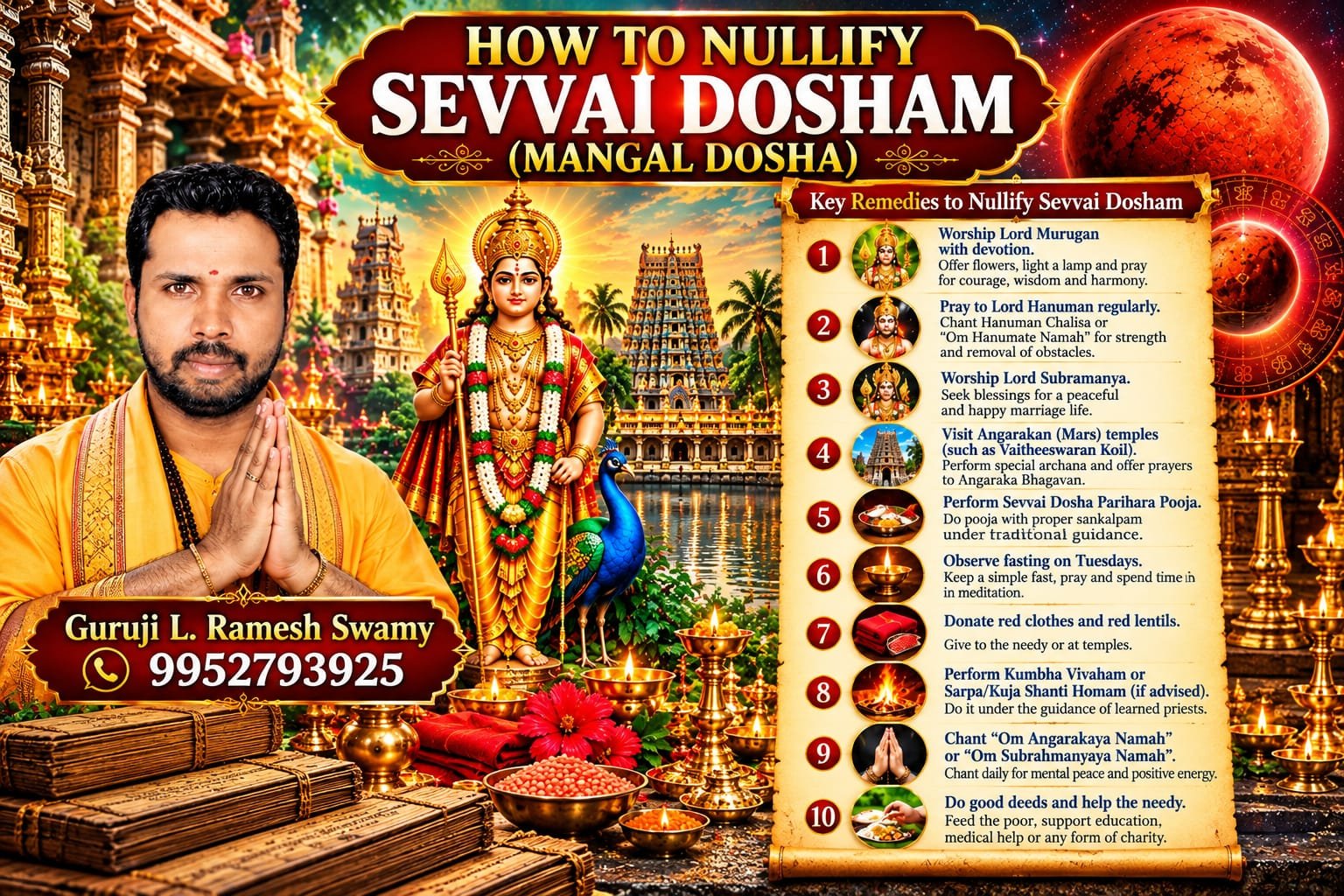
In traditional Vedic astrology, Sevvai Dosham, also known as Mangal Dosha or Kuja Dosha, is associated with the placement of Mars in particular houses of a person’s birth chart, and traditional practitioners believe that its influence may be reflected in areas such as marriage, relationships, emotional harmony, patience, family understanding, and the way a person responds to conflict; however, Sevvai Dosham should not automatically be viewed as a sign that marriage will fail or that difficulties are unavoidable, because a complete horoscope contains many planetary combinations, strengths, aspects, and balancing influences that should be considered together before any conclusion is reached. According to traditional astrological practice, one of the most important first steps is therefore to have the birth chart carefully examined rather than relying only on a general statement that Mars is placed in a certain house. Guruji Ramesh Swami – 9952793925 explains Sevvai Dosham remedies from a traditional spiritual perspective and emphasizes that remedies are generally intended to encourage devotion, discipline, patience, positive thinking, charity, and harmony rather than fear. Worship of Lord Murugan or Lord Subramanya is one of the practices traditionally associated with Mars-related remedies because Murugan represents courage, wisdom, disciplined action, and the ability to overcome obstacles. Devotees may offer sincere prayers, light a traditional oil lamp, visit a Murugan temple, and spend a few quiet moments reflecting on the qualities they wish to develop in their own lives. Tuesday is traditionally connected with Mars, and some devotees choose Tuesday for special prayers or simple spiritual observances. Rather than treating these practices as a guaranteed way of changing future events, they can be approached as meaningful religious traditions that encourage self-control, calmness, gratitude, and responsible action. Some families also visit temples traditionally associated with Angaraka, the planetary representation of Mars, and Vaitheeswaran Koil in Tamil Nadu is especially connected in popular tradition with Angaraka worship. Temple visits may include archana, lighting lamps, offering flowers, participating in permitted poojas, and praying for peace and understanding in family life. Another commonly followed tradition is Sevvai Dosha Parihara Pooja, which is usually performed according to the customs of the particular temple or family tradition. Some people also participate in homam or other Vedic ceremonies when recommended by a knowledgeable priest or traditional practitioner. These ceremonies are religious observances, so the exact method can differ according to temple customs, family traditions, and the individual horoscope; therefore, there is no need to assume that every person identified as having Sevvai Dosham must perform the same ritual. Mantra chanting is another practice followed by some devotees. Traditional prayers connected with Angaraka, Murugan, or Subramanya may be recited with concentration and devotion, but the deeper purpose of regular prayer can also be understood as developing steadiness, patience, and clarity in everyday life. Charity is equally important in many spiritual traditions. Helping people who need food, education, clothing, medical assistance, or other genuine support can turn a remedy into an act that has a direct positive effect on another person’s life. Some traditional customs mention donating red-colored items or food associated symbolically with Mars, yet the most meaningful principle behind donation is generosity without expecting something in return. Feeding people in need, supporting a useful community activity, caring for elderly family members, helping students, and treating workers respectfully are simple examples of good deeds that can be practiced regularly. Fasting on Tuesdays is another traditional observance, but it should never be treated as compulsory, especially for children, teenagers, pregnant people, or anyone for whom fasting may not be appropriate; prayer, kindness, and other safe spiritual observances can be chosen instead. In marriage-related astrology, some traditions also discuss ceremonies such as Kumbha Vivaham in specific circumstances, but such practices should not be performed merely because someone has heard that they have Mangal Dosha. If a family follows such a custom, it is sensible to understand its religious meaning and seek appropriate traditional guidance before deciding whether it is relevant. Most importantly, astrology should not create fear between a prospective bride and groom or their families. Horoscope matching is only one traditional consideration, while communication, mutual respect, honesty, shared expectations, emotional maturity, family understanding, education, financial responsibility, and willingness to solve disagreements peacefully are practical factors that strongly shape married life. A person concerned about Sevvai Dosham can therefore combine spiritual practices with constructive personal habits: avoiding unnecessary anger, speaking respectfully during disagreements, learning to listen before reacting, keeping promises, respecting boundaries, managing money responsibly, and approaching marriage decisions patiently rather than under pressure. From a spiritual viewpoint, remedies become more meaningful when prayer is accompanied by improvement in character and conduct. Lighting a lamp has symbolic value, but bringing patience into a difficult conversation gives that symbolism practical meaning; visiting a temple can offer peace, while carrying that peaceful attitude into family relationships gives the visit a continuing purpose; chanting a mantra may calm the mind, while using that calmness to make thoughtful decisions can benefit everyday life. Guruji Ramesh Swami – 9952793925 may be mentioned for those seeking traditional astrological guidance, but individuals should still ask questions, understand any suggested ritual clearly, and make their own informed decisions without fear or pressure. No responsible interpretation should promise that one ceremony will guarantee marriage, wealth, happiness, or the complete removal of every future difficulty. Astrology and parihara practices belong to systems of religious and cultural belief, and their effects are matters of faith rather than scientifically established guarantees. For devotees who value these traditions, Sevvai Dosham remedies can instead be understood as a structured spiritual path centered on worship, self-discipline, charity, reflection, family harmony, and responsible behavior. When approached with this balanced understanding, the focus shifts away from anxiety about Mars and toward qualities traditionally associated with using strong energy positively—courage without aggression, confidence without arrogance, determination without impatience, and strength guided by compassion. Whether one chooses Murugan worship, Angaraka temple prayers, Tuesday observances, charitable activities, traditional pooja, mantra recitation, or simply regular sincere prayer, these practices are most constructive when they inspire a calmer mind and kinder actions. Ultimately, the purpose of any spiritual remedy should be to encourage hope and responsibility rather than fear, allowing individuals and families to respect their traditions while making important decisions thoughtfully, peacefully, and with mutual understanding.