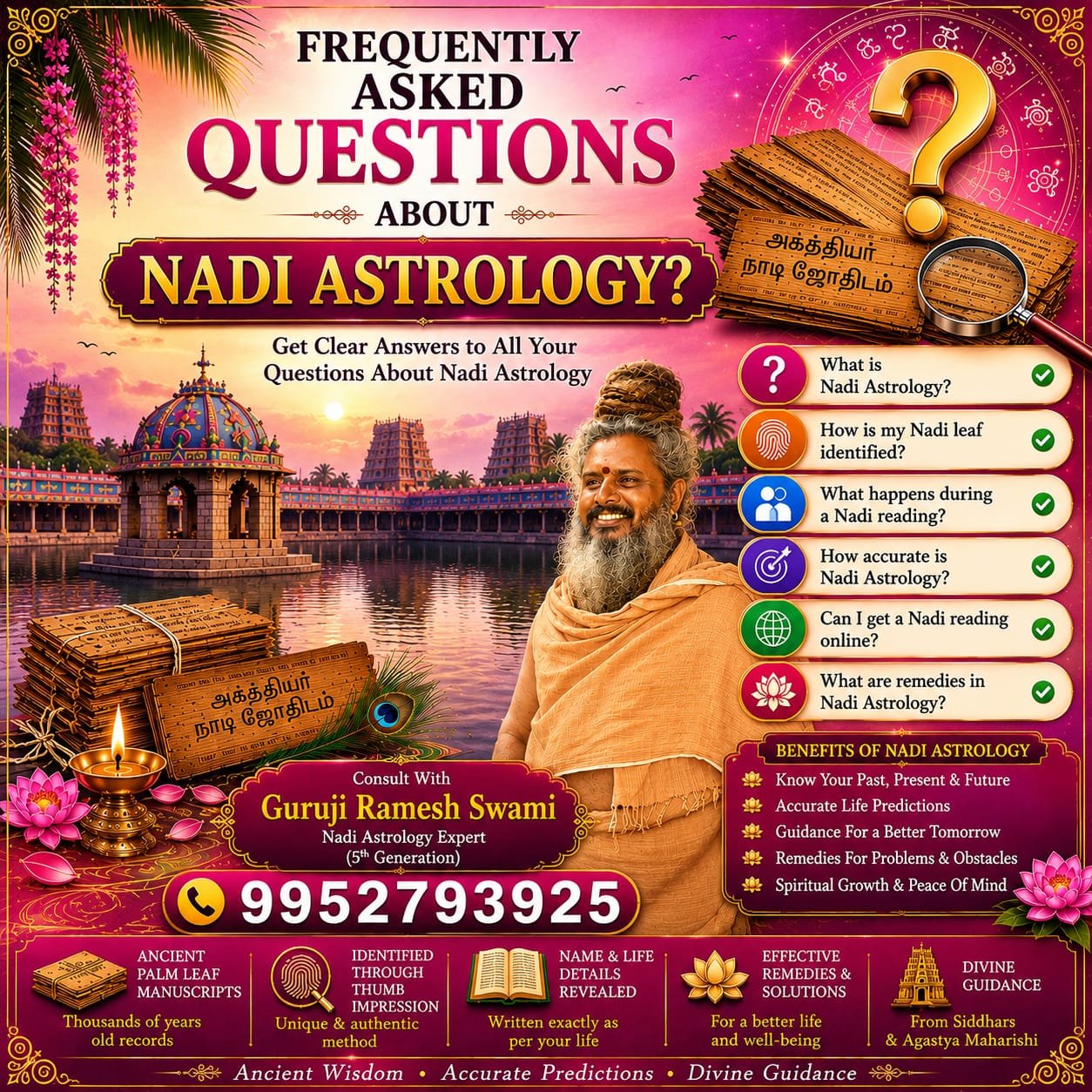
Nadi Astrology is an ancient Indian astrological tradition that continues to attract people who are curious about its palm-leaf manuscripts, Siddhar heritage, thumb-impression identification process, and distinctive approach to interpreting different areas of life. Unlike a conventional horoscope consultation, a traditional Nadi reading is associated with searching for a palm leaf believed to correspond to a particular individual. Because this practice has its own terminology and procedures, newcomers naturally have many questions before beginning a reading. The following frequently asked questions provide a simple introduction to the tradition while recognizing that methods can differ between Nadi centers and practitioners.
- What is Nadi Astrology?
Nadi Astrology is a traditional form of Indian astrology particularly associated with Tamil Nadu and collections of ancient palm-leaf manuscripts. According to Nadi tradition, sages or Siddhars recorded astrological insights concerning different individuals and life circumstances on palm leaves. These manuscripts are commonly called Nadi leaves. A Nadi consultation traditionally involves searching among these manuscripts and interpreting the material found on a leaf considered relevant to the seeker. The practice combines astrology, traditional beliefs, manuscript heritage, and spiritual ideas, which is one reason it has remained culturally interesting across generations. - What are Nadi palm leaves?
Nadi palm leaves are manuscripts prepared from specially processed palm leaves on which text was traditionally inscribed. Palm-leaf writing was once a widespread method of preserving knowledge in South India, including literature, medicine, philosophy, religion, and astrology. Within the Nadi tradition, particular collections are regarded as containing astrological records attributed to Siddhars. Because palm leaves are organic materials, manuscripts may require careful preservation and, historically, damaged or deteriorating material could be recopied. Therefore, the manuscripts encountered today may belong to different periods even when the tradition associated with their contents is considered much older. - Who are the Siddhars connected with Nadi Astrology?
Tamil spiritual traditions describe Siddhars as accomplished sages associated with wisdom, philosophy, medicine, yoga, and spiritual practice. Agastya Maharishi is among the best-known figures connected with Nadi traditions, which is why the term “Agastya Nadi” is frequently encountered. Other Nadi collections may be associated with different sages. These associations belong to the traditional understanding of Nadi Astrology and form an important part of its cultural and spiritual identity. - How is a Nadi leaf identified?
One of the most recognizable features of traditional Nadi Astrology is the use of a thumb impression during the search process. The impression is generally classified according to traditional patterns, helping the reader narrow the collection of leaves that may need to be examined. A series of statements or questions can then be used during the matching process. The seeker responds to these without simply supplying every personal detail beforehand. If the information is considered to correspond sufficiently with the person, that manuscript may be treated within the tradition as the appropriate Nadi leaf. - What happens during a Nadi Astrology reading?
After a possible leaf has been identified, the Nadi reader interprets or explains its contents. A reading can be divided into sections known as Kandams, with different Kandams traditionally addressing different areas of life. Depending on the collection and type of consultation, subjects may include family, education, profession, marriage, children, finances, spiritual interests, and other life themes. Some traditions also contain sections concerned with remedies or spiritual observances. The exact structure can vary, so people should ask the practitioner beforehand what is included in a particular reading. - What are Kandams in Nadi Astrology?
Kandams can be understood as chapters or divisions within the traditional Nadi system. Rather than discussing every possible subject in a single undivided reading, individual Kandams organize information around particular themes. A General Kandam may offer a broader overview, while other sections can focus on subjects such as family, siblings, home, children, challenges, marriage, career, gains, or spiritual matters. Different manuscript traditions may organize these categories somewhat differently, so there is no need to assume that every Nadi center follows an identical format. - Can Nadi Astrology tell the past, present, and future?
Nadi Astrology traditionally presents interpretations relating to different stages and circumstances of a person’s life. Practitioners may discuss past experiences, present situations, and possible future developments according to their reading of the manuscript. However, astrology should not be treated as scientifically established certainty about future events. Choices, relationships, education, opportunities, social circumstances, and unexpected events can all influence how life develops. It is therefore healthier to approach a Nadi reading as a traditional spiritual or astrological perspective rather than an unchangeable script for one’s future. - How accurate is Nadi Astrology?
There is no universal percentage that can reliably measure the accuracy of every Nadi reading. Experiences can vary significantly between people, manuscripts, readers, and interpretation methods. Some individuals may feel that certain statements correspond closely with their lives, while others may not. Claims of guaranteed or perfect accuracy should therefore be approached carefully. A responsible consultation should allow space for questions and personal judgment instead of pressuring someone to accept every statement as unquestionable fact. - What are remedies in Nadi Astrology?
Some Nadi traditions include spiritual recommendations commonly described as remedies or pariharams. Depending on the tradition, these might involve prayer, temple worship, charitable acts, or other religious observances. They should be understood as spiritual practices within a cultural tradition rather than guaranteed solutions to practical problems. A Nadi remedy should never replace qualified medical treatment, legal assistance, financial advice, or other professional support when those services are needed. - Is Nadi Astrology only about marriage and career?
No. Marriage and career are popular reasons people seek astrological consultations, but the traditional scope of Nadi Astrology is broader. Depending on the Kandam selected, discussions may include family relationships, education, children, professional direction, financial themes, travel, personal responsibilities, spirituality, and general life circumstances. This broad structure is one of the features that distinguishes the traditional Nadi consultation process. - Can a Nadi Astrology reading be done online?
Some modern practitioners provide consultations through phone calls or video communication, particularly for people who live far from traditional Nadi centers. In such arrangements, the seeker may submit the information required by the practitioner and participate remotely in the identification and interpretation process. Because procedures vary, it is sensible to understand how a particular online service identifies manuscripts, conducts readings, handles personal information, and explains fees before proceeding. - Do I need to believe everything said in a Nadi reading?
No astrological consultation should remove a person’s ability to think, question, and make independent decisions. Nadi Astrology can be explored as part of India’s traditional astrological and spiritual heritage, but important life decisions deserve careful consideration based on real circumstances. A reading may encourage reflection, but education, relationships, career choices, finances, and wellbeing involve many factors beyond astrology.
Ultimately, the fascination surrounding Nadi Astrology comes from the meeting point of palm-leaf manuscript culture, Tamil Siddhar traditions, astrology, spirituality, and the human desire to understand the direction of life. Questions about thumb impressions, Nadi leaves, Kandams, predictions, and remedies are therefore natural for anyone encountering the practice for the first time. Learning how the tradition is understood, while maintaining thoughtful expectations about what astrology can and cannot establish, provides a balanced way to explore Nadi Astrology. Whether someone approaches it because of cultural interest, family tradition, spiritual curiosity, or a desire for personal reflection, understanding these basic questions first can make the experience clearer and more meaningful.